
 ZeckRV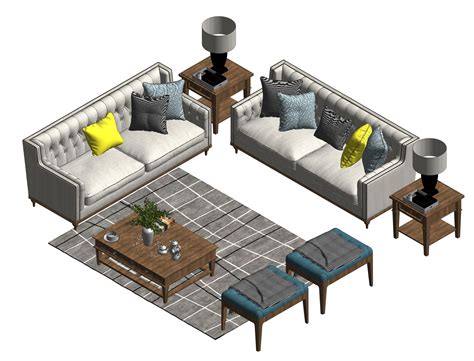
INTERIORDECOR.BIZ.ID – Integrating high-quality living room furniture Revit families is crucial for creating detailed and functional architectural visualizations. These digital assets are fundamental building blocks within Autodesk Revit, allowing designers to accurately represent spaces and components.
By leveraging specific furniture families for living areas, professionals can enhance the realism and precision of their Building Information Modeling (BIM) projects. This approach ensures that every sofa, table, and decorative item contributes to a comprehensive and visually appealing design.
Understanding Revit Families in Interior Design
Revit families are collections of parameterized graphical elements used to build a model, ranging from walls and doors to intricate furniture pieces. They empower users to create smart, data-rich components that can be customized and reused across multiple projects.
For living room furniture, these families define not only the 3D geometry but also essential data like dimensions, materials, and manufacturer information. This data is invaluable for various stages of a project, from initial design concepts to detailed documentation.
Why Specific Living Room Furniture Families are Essential
Using dedicated living room furniture Revit families brings numerous advantages to the design workflow. They provide accurate scale and proportions, ensuring that furniture fits seamlessly within the planned space.
This precision helps in avoiding costly design errors and facilitates better coordination among different design disciplines. Furthermore, highly detailed families contribute significantly to photorealistic renderings, giving clients a clear vision of the final outcome.
Types of Living Room Furniture Families
The range of living room furniture Revit families is extensive, covering virtually every item imaginable for a comfortable and stylish space. Common categories include seating such as sofas, armchairs, and recliners, each with varying styles and configurations.
Additionally, you’ll find families for coffee tables, side tables, entertainment units, shelving, and even decorative elements like lamps, rugs, and artwork. Each family can be customized with different materials and finishes to match specific design aesthetics.
Key Considerations for Family Selection
When selecting or creating living room furniture Revit families, several factors should guide your choice. Prioritize families that offer a good balance between visual detail and file size to maintain optimal project performance.
Look for families with intuitive parameters that allow for easy adjustments to dimensions, materials, and visibility settings. High-quality families also adhere to industry standards and are compatible with different Revit versions.
Benefits for Architects and Interior Designers
The strategic use of Revit families streamlines the entire design process for living room spaces. Designers can rapidly iterate through different layouts and furniture arrangements, saving considerable time and effort.
Moreover, these families aid in creating accurate schedules and material take-offs, crucial for cost estimation and procurement. The ability to visualize designs in 3D enhances communication with clients, leading to quicker approvals and higher satisfaction.
Finding and Managing Your Furniture Families
Numerous online platforms offer extensive libraries of living room furniture Revit families, both free and premium options. Reputable sources often provide high-quality, verified content ready for integration into your projects.
For unique or bespoke designs, consider creating custom families using Revit’s powerful Family Editor tools. Effective management involves organizing families into logical libraries and regularly purging unused elements from your projects to keep file sizes manageable.
In conclusion, mastering the use of living room furniture Revit families is indispensable for modern architectural and interior design practices. They are more than just 3D models; they are intelligent components that drive efficiency, accuracy, and stunning visual results.
Embracing these tools empowers designers to bring their creative visions to life with unparalleled precision and professionalism. The investment in understanding and utilizing these families pays dividends in project quality and client satisfaction.
Frequently Asked Questions (FAQ)
What is a Revit family?
A Revit family is a group of parameterized elements used in Autodesk Revit to create 3D models. These elements can be simple (like a wall) or complex (like a piece of furniture with adjustable dimensions and materials).
Why use specific living room furniture Revit families?
Using specific living room furniture Revit families ensures accurate scale, detailed visualization, and precise data for your designs. They improve realism, aid in space planning, and contribute to accurate documentation and clash detection within BIM projects.
Where can I find living room furniture Revit families?
You can find Revit families on various online platforms, including manufacturer websites, dedicated Revit content libraries (both free and paid), and BIM object repositories. Some popular sources include RevitCity, BIMobject, and reputable furniture brand websites.
Can I create my own Revit families for furniture?
Yes, Revit includes a powerful Family Editor that allows users to create custom families from scratch or modify existing ones. This is particularly useful for designing bespoke furniture pieces or incorporating unique design elements into a living room layout.
What are the benefits of using Revit families in interior design?
The benefits include improved accuracy, enhanced visualization for clients, efficient design iteration, automated scheduling of components, and better collaboration with other disciplines. They significantly streamline the design-to-documentation workflow.
Written by: Robert Miller