
 ZeckRV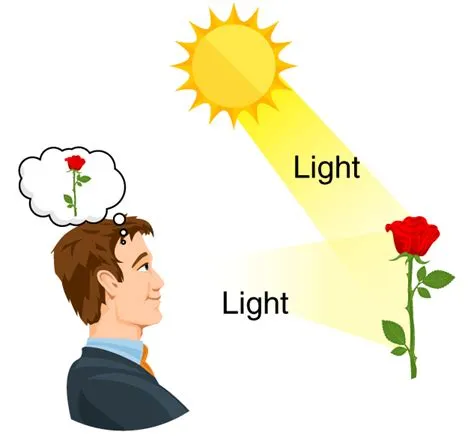
INTERIORDECOR.BIZ.ID – Light is a fundamental concept in our universe, playing a crucial role in how we perceive and interact with the world around us. From the vibrant colors that fill our vision to the energy that sustains life, light is an omnipresent force. Understanding its definition and exploring its diverse examples helps us appreciate its significance.
At its core, light is a form of electromagnetic radiation that is visible to the human eye. It travels in waves and also exhibits particle-like properties, a concept known as wave-particle duality. This duality is a cornerstone of quantum mechanics and explains many of light’s fascinating behaviors.
What is Light?
Scientifically, light is part of the electromagnetic spectrum, which includes radio waves, microwaves, infrared radiation, visible light, ultraviolet radiation, X-rays, and gamma rays. Visible light is the narrow band of this spectrum that our eyes can detect, typically ranging from about 380 to 750 nanometers in wavelength.
Light originates from sources that emit electromagnetic waves. These sources can be natural, like the Sun and stars, or artificial, such as light bulbs and lasers. The energy carried by these waves is what makes light observable and useful.
Properties of Light
Light exhibits several key properties, including reflection, refraction, diffraction, and interference. Reflection is when light bounces off a surface, like a mirror. Refraction occurs when light bends as it passes from one medium to another, such as from air into water.
Diffraction is the bending of light waves as they pass around an obstacle or through a narrow opening. Interference happens when two or more light waves combine, either reinforcing each other (constructive interference) or canceling each other out (destructive interference). These properties are essential for understanding optical phenomena.
Examples of Light in Action
The Sun is the most prominent natural source of light for Earth. Its rays provide not only illumination but also warmth, driving weather patterns and initiating life-sustaining processes. Photosynthesis in plants, for instance, relies directly on sunlight to convert carbon dioxide and water into energy.
Artificial light sources have revolutionized human life. Incandescent light bulbs, fluorescent lamps, and LED (Light Emitting Diode) lights are common examples that allow us to extend our activities beyond daylight hours. Each technology utilizes different principles to generate light.
Light in Nature
Beyond the Sun, other natural phenomena involve light. Rainbows are a beautiful example of light dispersion, where sunlight is refracted and reflected by raindrops, splitting into its constituent colors. Bioluminescence, the production of light by living organisms, is seen in fireflies and deep-sea creatures.
The phenomenon of aurora borealis (Northern Lights) and aurora australis (Southern Lights) is caused by charged particles from the Sun interacting with Earth’s atmosphere, exciting atmospheric gases to emit light in vibrant colors.
Light in Technology and Daily Life
Lasers, a highly focused and coherent form of light, have numerous applications, from barcode scanners and CD/DVD players to surgical tools and telecommunications. Fiber optics, which transmit data as pulses of light through thin strands of glass, are the backbone of modern internet infrastructure.
Photography captures images by recording the light reflected or emitted by objects. Telescopes use lenses or mirrors to gather and focus light from distant celestial bodies, allowing us to observe the universe. Even everyday objects like screens on our phones and computers emit light to display information.
The Importance of Light
Light is not just for seeing; it’s a carrier of energy and information. It allows for navigation, communication, and scientific observation. Without light, our world would be a vastly different and much less understood place.
From the biological imperative of sunlight for life to the technological marvels it enables, light continues to be a subject of study and wonder. Its pervasive presence and multifaceted nature underscore its indispensable role in the cosmos and our daily existence.
Conclusion
In summary, light is electromagnetic radiation visible to the human eye, characterized by its wave-particle duality. It manifests in countless examples, from the celestial glow of stars to the artificial luminescence of our cities, shaping our perception, enabling technology, and underpinning life itself.
Understanding the definition and diverse examples of light provides a foundational appreciation for the physical world. Whether it’s the energy from the Sun warming our planet or the information transmitted through optical fibers, light remains a key element of our universe.
Frequently Asked Questions (FAQ)
What is the scientific definition of light?
Scientifically, light is a form of electromagnetic radiation within the electromagnetic spectrum that is visible to the human eye, typically ranging from 380 to 750 nanometers in wavelength. It travels as both waves and particles.
What are some natural examples of light?
Natural examples include sunlight, starlight, bioluminescence (like fireflies), and atmospheric phenomena like rainbows and auroras.
What are some artificial examples of light?
Artificial examples include light bulbs (incandescent, fluorescent, LED), lasers, and the light emitted from electronic screens like those on smartphones and computers.
What is wave-particle duality related to light?
Wave-particle duality is the concept that light exhibits properties of both waves (like diffraction and interference) and particles (like photons carrying energy).
How does light affect life on Earth?
Light, particularly from the Sun, is essential for life. It provides warmth, drives photosynthesis in plants (the base of many food chains), and influences biological rhythms.
Written by: David Thomas