
 ZeckRV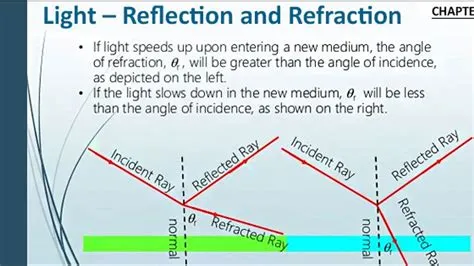
INTERIORDECOR.BIZ.ID – Light is a fundamental aspect of our universe, enabling us to perceive the world around us. For many organisms, it serves as a primary tool for interacting with their environment. As stated, light from the Sun warms the Earth, drives weather patterns, and initiates life-sustaining processes. In physics, understanding the definition of light is crucial for grasping various optical phenomena.
In the context of Class 10 science, light can be defined as a form of electromagnetic radiation that makes objects visible. It is a transverse wave that travels in a straight line and possesses both wave-like and particle-like properties. This dual nature is a cornerstone of modern physics and is often referred to as wave-particle duality.
The Electromagnetic Spectrum
Light is part of a broader spectrum known as the electromagnetic (EM) spectrum. This spectrum encompasses all forms of electromagnetic radiation, from radio waves with long wavelengths to gamma rays with very short wavelengths. Visible light occupies a narrow band within this spectrum.
The EM spectrum is organized by wavelength and frequency, with light falling in the range that our eyes can detect. Wavelength refers to the distance between two consecutive crests or troughs of a wave, while frequency denotes the number of waves that pass a fixed point in one second. These two properties are inversely related.
Wave Properties of Light
As a wave, light exhibits phenomena like reflection, refraction, diffraction, and interference. Reflection occurs when light bounces off a surface, similar to how a ball bounces off a wall. This principle is fundamental to how mirrors work.
Refraction is the bending of light as it passes from one medium to another, such as from air to water. This bending happens because the speed of light changes as it enters a different medium, causing its path to deviate. Lenses in cameras and our eyes utilize refraction to focus light.
Particle Properties of Light
Beyond its wave nature, light also behaves as if it were composed of discrete packets of energy called photons. These photons act like particles, carrying a specific amount of energy. This particle-like behavior is particularly evident in phenomena like the photoelectric effect.
The photoelectric effect demonstrates that light can eject electrons from a metal surface when it strikes it. This effect can only be explained if light is considered to be made up of photons, where each photon’s energy is transferred to an electron. The energy of a photon is directly proportional to the frequency of the light.
Speed of Light
The speed of light in a vacuum is a universal constant, denoted by the symbol ‘c’. It is approximately 299,792,458 meters per second. This speed is incredibly fast, meaning light can travel around the Earth about 7.5 times in just one second.
When light travels through different mediums like water or glass, its speed decreases. The ratio of the speed of light in a vacuum to its speed in a medium is called the refractive index of that medium. This refractive index is a measure of how much the medium slows down light.
Interaction with Matter
Light interacts with matter in several ways, including absorption, transmission, and scattering. Absorption occurs when light energy is taken in by a material, often converting it into heat. This is why dark surfaces tend to get hotter in sunlight.
Transmission is the passage of light through a material without being absorbed. Transparent materials, like glass, allow light to pass through them easily, enabling us to see objects on the other side. Opaque materials, conversely, block light from passing through.
Color and Wavelength
The color of light is determined by its wavelength. Our eyes perceive different wavelengths of visible light as different colors, forming the spectrum from violet to red. White light, like sunlight, is actually a combination of all these colors.
When white light encounters a prism, it splits into its constituent colors due to the different refractive indices for each wavelength. This phenomenon, known as dispersion, is what creates rainbows. Different colors of light are refracted at slightly different angles.
Importance of Light
Light plays an indispensable role in life on Earth. Photosynthesis, the process by which plants convert light energy into chemical energy, is fundamental to most food chains. Without sunlight, plant life would cease, impacting all other organisms.
Beyond its biological significance, light is also crucial for technological advancements. Lasers, fiber optics, and digital imaging all rely on a deep understanding of light’s properties. Its ability to transmit information at high speeds makes it vital for modern communication systems.
Key Takeaways
To summarize the definition of light for Class 10:
- Light is electromagnetic radiation that enables vision.
- It exhibits both wave and particle (photon) properties.
- Its speed in a vacuum is a universal constant.
- Visible light is a small part of the electromagnetic spectrum.
- Color is determined by wavelength.
- Light interacts with matter through absorption, transmission, and scattering.
Understanding these characteristics provides a solid foundation for exploring more complex optical principles and their applications in science and technology.
The definition of light is not static but has evolved with scientific discovery. From early theories describing light as purely waves to the modern understanding of its dual nature, our comprehension continues to grow. This ongoing exploration highlights the fascinating and multifaceted nature of light.
Frequently Asked Questions (FAQ)
What is light in simple terms for a 10th grader?
Light is a form of energy that travels in waves and helps us see things. It’s like tiny packets of energy called photons that move very, very fast.
Is light a wave or a particle?
Light has a dual nature, meaning it behaves like both a wave and a particle. Sometimes it acts like a wave, and other times it acts like a particle (called a photon).
What is the speed of light?
The speed of light in a vacuum is incredibly fast, about 299,792,458 meters per second. It’s the fastest speed possible in the universe.
Why are things different colors?
Things are different colors because they absorb some wavelengths of light and reflect others. The color we see is the wavelength of light that is reflected back to our eyes.
What is refraction of light?
Refraction is when light bends as it passes from one substance to another, like from air to water. This happens because light travels at different speeds in different materials.
Written by: Michael Brown