
 ZeckRV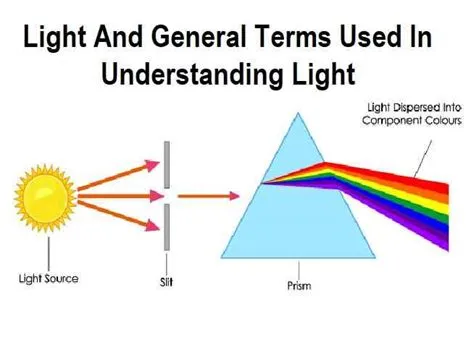
INTERIORDECOR.BIZ.ID – Light is a fundamental aspect of our existence, playing a crucial role in how we perceive the world around us. For many organisms, light is the primary tool for gathering information and interacting with their environment. The sun’s light, for instance, is essential for warming our planet and driving weather patterns, initiating the very processes that sustain life.
In simple terms, light can be defined as a form of energy that allows us to see. It travels in waves and is part of a larger spectrum known as electromagnetic radiation. When this energy reaches our eyes, our brain interprets it as images, enabling us to distinguish colors, shapes, and distances.
What is Light?
For a Class 6 student, light can be understood as something that makes things visible. Without light, everything would appear dark and indistinct. Think of a room with the lights turned off; you can’t see anything until you switch them on. That switch turning on the light is introducing the energy that makes seeing possible.
Scientifically, light is a type of electromagnetic wave. This means it has both electric and magnetic properties and can travel through space. Unlike sound waves, which need a medium like air or water to travel, light can even travel through the vacuum of space.
The Electromagnetic Spectrum
The light we see with our eyes is just a small part of a much broader range of electromagnetic waves, called the electromagnetic spectrum. This spectrum includes radio waves, microwaves, infrared radiation, visible light, ultraviolet radiation, X-rays, and gamma rays, all of which have different wavelengths and frequencies.
Visible light, the portion that our eyes can detect, is responsible for the colors we see. Different colors correspond to different wavelengths within the visible light spectrum, ranging from red with longer wavelengths to violet with shorter wavelengths.
Properties of Light
Light exhibits several fascinating properties that help us understand its behavior. One of the most fundamental properties is that light travels in straight lines. This is why we can see shadows; when an object blocks the path of light, a dark area forms behind it.
Another key property is reflection. When light strikes a surface, it bounces off. This is how we see non-luminous objects; light from a source like the sun or a lamp hits the object, and then reflects into our eyes. Mirrors are excellent examples of surfaces that reflect light very effectively.
Refraction of Light
Light also undergoes refraction, which is the bending of light as it passes from one medium to another. This phenomenon occurs because light travels at different speeds in different materials. For example, light travels slower in water than it does in air.
A common example of refraction is when a straw placed in a glass of water appears to be bent or broken at the water’s surface. This optical illusion is due to light rays bending as they move from the water into the air before reaching our eyes.
Sources of Light
There are two main categories of light sources: luminous and non-luminous. Luminous sources produce their own light, such as the Sun, stars, light bulbs, and candles. These are the primary sources that illuminate our surroundings.
Non-luminous objects, on the other hand, do not produce their own light. Instead, they are visible because they reflect light from luminous sources. Examples include the Moon, books, furniture, and almost everything else we see that isn’t a light-emitting object.
Natural vs. Artificial Light
Sources of light can also be classified as natural or artificial. Natural light sources are those that occur in nature, with the Sun being the most prominent example. Other natural sources include lightning and fireflies.
Artificial light sources are man-made. These include incandescent bulbs, fluorescent lights, LEDs, and lasers. These inventions allow us to have light even when natural light is unavailable, extending our activities into the night.
The Importance of Light
Light is absolutely essential for life on Earth. Photosynthesis, the process by which plants create their food, relies heavily on sunlight. This process not only feeds plants but also forms the base of most food chains.
Furthermore, light is critical for our vision, allowing us to navigate, work, learn, and experience the beauty of the world. It influences our sleep-wake cycles and plays a role in our overall well-being. Understanding light helps us appreciate the complex and interconnected systems of our universe.
Light and Technology
Our understanding of light has led to numerous technological advancements. From simple tools like lenses and telescopes to complex technologies like fiber optics for communication and lasers for medical procedures, light is at the heart of innovation.
The development of energy-efficient lighting, like LEDs, has also had a significant impact on reducing energy consumption worldwide. Light continues to be a key area of scientific research, promising even more exciting discoveries and applications in the future.
In conclusion, light is a form of energy that enables vision and plays a vital role in natural processes and technological advancements. By understanding its basic properties and sources, we gain a deeper appreciation for its significance in our lives and the world around us.
FAQs about Light:
- What is light? Light is a form of energy that allows us to see and travels in waves.
- How does light travel? Light travels in straight lines.
- What is reflection? Reflection is when light bounces off a surface.
- What is refraction? Refraction is the bending of light as it passes from one material to another.
- What are some sources of light? The Sun, stars, light bulbs, and candles are sources of light.
Written by: Sophia Martinez