
 ZeckRV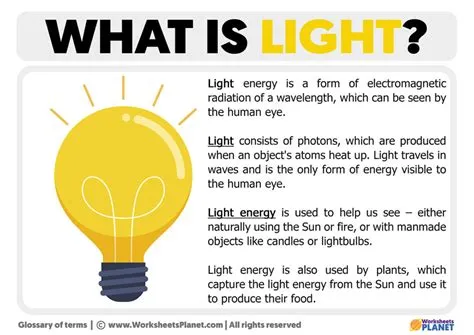
INTERIORDECOR.BIZ.ID – Light is a fundamental part of our world, helping us see everything around us. It’s how we perceive shapes, colors, and movements, making it a primary tool for interacting with our environment.
For many living things, light is essential for survival and understanding their surroundings. Plants use sunlight to grow, and animals use it to find food and avoid danger.
What is Light?
Light is a form of energy that travels in waves. These waves are called electromagnetic waves, and they move very, very fast.
Think of waves in the ocean, but instead of water, it’s energy moving through space. These waves have different lengths and frequencies, which determine the kind of light we see.
The Visible Spectrum: Our Rainbow of Colors
The light we can see is called visible light. It is made up of different colors, just like a rainbow. When all these colors are together, we see white light.
When white light passes through something like a prism, it separates into its individual colors: red, orange, yellow, green, blue, indigo, and violet. This is known as the visible spectrum.
Sources of Light
There are many sources of light, both natural and artificial. Natural sources are things that produce light on their own, like the Sun or stars.
Artificial sources are things that humans have made to produce light, such as light bulbs, lamps, and LEDs.
The Sun: Our Brightest Natural Light Source
The Sun is the most important source of light for Earth. It provides the light and warmth that allows life to thrive on our planet.
The Sun’s light is what enables plants to perform photosynthesis, the process they use to make their own food, and it also warms our planet, driving weather patterns.
How Light Travels
Light travels in straight lines. This is why we can see shadows. A shadow is formed when an opaque object blocks the path of light.
Imagine shining a flashlight on a wall. The beam of light travels straight from the flashlight to the wall, creating a focused spot.
Reflection and Refraction
When light hits a surface, it can do two main things: reflect or refract. Reflection is when light bounces off a surface, like a mirror.
Refraction is when light bends as it passes from one material to another, such as from air into water. This is why a straw in a glass of water appears bent.
The Importance of Light
Light is crucial for our vision, allowing us to see the world in detail. It helps us navigate, recognize objects, and appreciate the beauty around us.
Beyond vision, light plays a vital role in many biological processes, from plant growth to regulating sleep cycles in animals and humans.
Light and Photosynthesis
Plants rely heavily on light for photosynthesis. This process converts light energy into chemical energy, essentially making food for the plant.
Without sunlight, most plants would not be able to grow, impacting the entire food chain and the availability of oxygen.
Exploring Light Further
Understanding light is the first step in exploring many fascinating scientific concepts. It leads to learning about optics, the study of light and its properties.
By learning about light, you can begin to understand how cameras work, how our eyes see, and even how telescopes allow us to see distant stars.
Fun Facts About Light
Light travels incredibly fast, about 186,282 miles per second. If you could travel at the speed of light, you could circle the Earth about 7.5 times in just one second.
Different colors of light have different wavelengths. Red light has the longest wavelength, while violet light has the shortest wavelength in the visible spectrum.
Light in Our Daily Lives
From the screens we use to the lamps that light our rooms, light is integrated into our daily lives in countless ways. It helps us work, play, and communicate.
Understanding the basic properties of light empowers us to appreciate the technology that surrounds us and the natural phenomena that shape our world.
Conclusion: A World Illuminated
In summary, light is energy that travels in waves, allowing us to see and interact with our world. It comes from natural and artificial sources and behaves in predictable ways like traveling in straight lines and bending or bouncing off surfaces.
The study of light is a doorway to understanding many scientific wonders, highlighting its indispensable role in life on Earth and the technologies we use every day.
FAQ Section
What is light energy?
Light energy is a form of electromagnetic radiation that travels in waves and can be perceived by the human eye.
Why is light important for plants?
Light is essential for plants because they use it during photosynthesis to create their own food and grow.
What is the difference between reflection and refraction?
Reflection is when light bounces off a surface, while refraction is when light bends as it passes through different materials.
Can we see all types of light?
No, we can only see a small portion of all the light that exists, which is called visible light; there are other types of light like infrared and ultraviolet that we cannot see.
How does light help us see colors?
We see colors because different objects absorb some colors of light and reflect others. The color we see is the color that is reflected back to our eyes.
Written by: Olivia Anderson