
 ZeckRV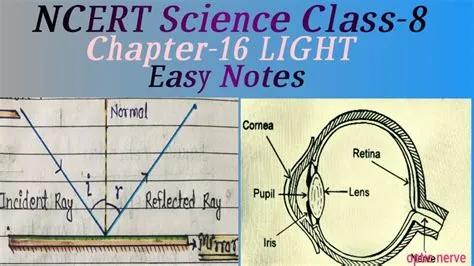
INTERIORDECOR.BIZ.ID – Light is a fundamental aspect of our universe, playing a crucial role in how we perceive and interact with our surroundings. For many organisms, light is the primary tool for understanding the world.
From the Sun, light provides warmth that influences Earth’s climate and weather patterns, initiating processes essential for life. This electromagnetic radiation is what allows us to see colors, shapes, and distances, making it indispensable for survival and exploration.
What is Light?
In physics, light is defined as a form of electromagnetic radiation that is visible to the human eye. It travels in waves, similar to ripples on a pond, but these waves are much smaller and move at an incredibly high speed.
These waves possess both electric and magnetic properties, hence the term ‘electromagnetic’. The spectrum of electromagnetic radiation is vast, with visible light being just a small portion of it.
The Electromagnetic Spectrum
Beyond visible light, there are other forms of electromagnetic radiation like radio waves, microwaves, infrared, ultraviolet, X-rays, and gamma rays. These differ in their wavelength and frequency.
Wavelength refers to the distance between two consecutive crests of a wave, while frequency is the number of waves that pass a point in one second. Higher frequency means shorter wavelength, and vice versa.
Properties of Light
One of the most significant properties of light is its speed; in a vacuum, it travels at approximately 299,792 kilometers per second, the fastest speed possible in the universe. This incredible speed allows light from distant stars to reach us.
Light also travels in straight lines, a phenomenon known as rectilinear propagation. This is why shadows are formed when an opaque object blocks its path.
Reflection and Refraction
When light encounters a surface, it can bounce off, which is called reflection. This is how mirrors work, reflecting light back to our eyes, allowing us to see our reflection.
Alternatively, when light passes from one medium to another (like from air to water), it can bend. This bending of light is called refraction, and it’s responsible for optical illusions like a straw appearing bent in a glass of water.
The Nature of Light
Scientists have discovered that light exhibits a dual nature, behaving both as a wave and as a particle. As a wave, it can diffract (spread out) and interfere (combine or cancel out).
As a particle, light is made up of tiny packets of energy called photons. These photons carry energy and momentum, and their interaction with matter explains many phenomena, such as the photoelectric effect.
Sources of Light
Sources of light can be broadly categorized into luminous and non-luminous objects. Luminous objects produce their own light, such as the Sun, stars, light bulbs, and fireflies.
Non-luminous objects do not produce their own light but are visible because they reflect light from luminous sources. The Moon, for example, appears bright because it reflects sunlight.
Natural vs. Artificial Light
Natural light sources are those that occur in nature, with the Sun being the most prominent example. Other natural sources include lightning and bioluminescent organisms.
Artificial light sources are those created by humans, such as incandescent bulbs, fluorescent lamps, LEDs, and lasers. These have revolutionized how we live and work, allowing for activities after sunset.
Importance of Light
Light is indispensable for life on Earth. Photosynthesis, the process by which plants convert light energy into chemical energy, forms the base of most food chains.
Furthermore, vision, our primary sense for spatial awareness, relies entirely on light reflecting off objects and entering our eyes. Without light, the world as we know it would cease to exist.
Light in Technology
Modern technology heavily relies on understanding and manipulating light. Fiber optics use light to transmit data at high speeds, forming the backbone of the internet.
Lasers, which produce a concentrated beam of light, have applications in medicine, manufacturing, entertainment, and scientific research.
Conclusion
In summary, light is a fascinating and vital form of energy that travels as electromagnetic waves and behaves as both a wave and a particle. Its properties of speed, straight-line propagation, reflection, and refraction enable us to see and interact with our environment.
From warming our planet to powering our technologies, light’s influence is pervasive and profound, making its study a cornerstone of science education.
Key Takeaways:
- Light is visible electromagnetic radiation traveling in waves.
- It travels at an extremely high speed and in straight lines.
- Light exhibits dual nature: wave-particle duality.
- Key properties include reflection and refraction.
- Sources can be natural (Sun) or artificial (bulbs).
- Light is essential for vision, photosynthesis, and technology.
This foundational understanding of light is crucial for grasping more advanced physics concepts and appreciating the world around us.
The Sun’s light is not only essential for sight but also drives global weather patterns and initiates life-sustaining processes on Earth.
Frequently Asked Questions (FAQ)
What is light in simple terms for Class 8?
Light is a form of energy that allows us to see. It travels very fast in straight lines and is part of a spectrum of waves called electromagnetic waves, where visible light is just a small part we can see.
What are the main properties of light?
The main properties of light include traveling in straight lines (rectilinear propagation), traveling at a very high speed, reflecting off surfaces (like a mirror), and refracting (bending) when it passes through different materials (like water).
What is the difference between reflection and refraction?
Reflection is when light bounces off a surface, like seeing yourself in a mirror. Refraction is when light bends as it passes from one substance to another, such as a straw looking bent in a glass of water.
What are the sources of light?
Light sources are either luminous (they produce their own light, like the Sun or a light bulb) or non-luminous (they reflect light from other sources, like the Moon).
Why is light important?
Light is important because it allows us to see, plants use it for photosynthesis to make food, and it’s essential for many technologies like cameras, lasers, and fiber optics.
Does light travel in waves or particles?
Light has a dual nature, meaning it can behave both as a wave and as a particle. As a wave, it shows properties like diffraction and interference. As a particle, it’s made of tiny energy packets called photons.
Written by: James Wilson