
 ZeckRV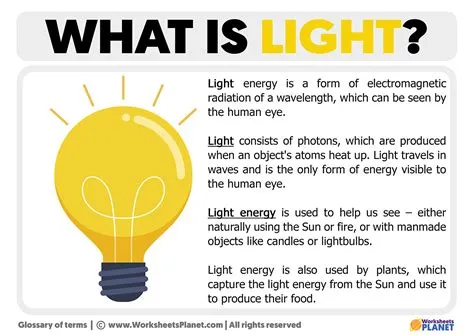
INTERIORDECOR.BIZ.ID – Light is a fundamental aspect of our universe, playing a crucial role in how we perceive and interact with our surroundings. For students in Class 9, understanding the basic definition and properties of light is the first step in exploring the fascinating field of optics. This knowledge forms the bedrock for comprehending various optical phenomena, from simple reflections to complex refractions.
At its core, light is a form of energy that travels in waves. These waves are electromagnetic, meaning they do not require a medium to propagate and can travel through the vacuum of space. The Sun, our primary source of light, not only illuminates our planet but also provides the energy that drives weather patterns and sustains life.
What is Light? Defining the Basics
In physics, light is defined as a transverse electromagnetic wave that is part of the electromagnetic spectrum. It is the portion of this spectrum that is visible to the human eye, allowing us to see objects and colors. The range of wavelengths perceived as visible light is relatively narrow, nestled between ultraviolet and infrared radiation.
Think of light as ripples on a pond, but instead of water, these ripples are made of oscillating electric and magnetic fields. These oscillations are perpendicular to the direction the wave is traveling, hence the term ‘transverse wave’.
The Dual Nature of Light
One of the most intriguing aspects of light is its dual nature, exhibiting properties of both waves and particles. While we often describe light as a wave, it also behaves as if composed of discrete packets of energy called photons.
This particle-like behavior is evident in phenomena like the photoelectric effect, where light strikes a material and ejects electrons. Each photon carries a specific amount of energy, determined by its frequency.
Properties of Light for Class 9 Students
Several key properties of light are essential for Class 9 students to grasp. These properties help explain everyday optical occurrences and form the basis for more advanced optical studies.
Firstly, light travels in straight lines, a concept known as rectilinear propagation. This is why shadows are formed and how pinhole cameras create inverted images.
Secondly, light can be reflected when it bounces off a surface. The laws of reflection dictate that the angle of incidence equals the angle of reflection, a principle seen in mirrors.
Thirdly, light can be refracted, meaning it bends when it passes from one medium to another, such as from air to water. This bending occurs because the speed of light changes in different mediums, a phenomenon responsible for the apparent bending of a straw in a glass of water.
Speed of Light and Electromagnetic Spectrum
The speed of light in a vacuum is a universal constant, denoted by ‘c’, approximately 299,792 kilometers per second. This is the fastest speed at which anything can travel in the universe.
The electromagnetic spectrum encompasses all forms of electromagnetic radiation, including radio waves, microwaves, infrared, visible light, ultraviolet, X-rays, and gamma rays. Visible light is just a small portion of this vast spectrum, differentiated by its wavelength and frequency.
Interaction of Light with Matter
When light encounters matter, several interactions can occur. These include reflection, refraction, absorption, and scattering. Understanding these interactions helps explain why objects have color and how optical instruments function.
Absorption occurs when matter takes up light energy, converting it into heat. This is why dark objects tend to get warmer in sunlight than light-colored objects.
Visible Light and Color Perception
The perception of color is directly linked to how light interacts with objects and our eyes. Objects appear colored because they absorb certain wavelengths of visible light and reflect others.
For instance, a red apple appears red because its surface absorbs most wavelengths of visible light and reflects the red wavelengths back to our eyes. White objects reflect all wavelengths, while black objects absorb all wavelengths.
Applications of Light
The understanding of light and its properties has led to numerous technological advancements. From simple tools like lenses and mirrors to complex technologies like fiber optics and lasers, light plays a pivotal role in modern society.
Lasers, for example, produce a highly focused beam of coherent light, with applications ranging from barcode scanners to surgical procedures. Fiber optics utilize the principle of total internal reflection to transmit data at high speeds over long distances.
In summary, light is an electromagnetic wave with a dual nature, traveling at a constant speed in a vacuum and interacting with matter in various ways. Its definition and properties are fundamental concepts for Class 9 physics students to master.
By studying light, we gain insights into vision, color, and the fundamental forces that govern our universe. This foundational knowledge opens the door to understanding more complex physics topics and appreciating the technological marvels that surround us.
Frequently Asked Questions about Light
What is the primary source of light on Earth?
The Sun is the primary source of light on Earth, providing the energy that sustains life and drives global weather patterns.
Is light a wave or a particle?
Light exhibits dual nature, behaving as both a wave (electromagnetic wave) and a particle (photon).
What are the three main properties of light discussed in Class 9 physics?
The three main properties are rectilinear propagation (traveling in straight lines), reflection (bouncing off surfaces), and refraction (bending when passing through different mediums).
What is the speed of light?
The speed of light in a vacuum is approximately 299,792 kilometers per second (often rounded to 300,000 km/s).
Why do objects have different colors?
Objects have different colors because they absorb certain wavelengths of visible light and reflect others. The reflected wavelengths determine the color we perceive.
Written by: James Wilson