
 ZeckRV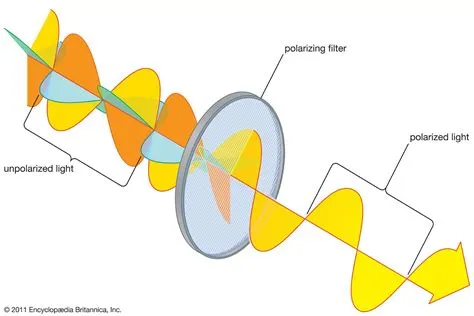
INTERIORDECOR.BIZ.ID – Light is a fundamental phenomenon that allows us to perceive the world around us and interact with it. From the warmth of the sun to the colors we see, light plays a crucial role in our daily lives. In the field of optics, understanding the nature and behavior of light is paramount.
Optics is the branch of physics that studies the behavior and properties of light, including its interactions with matter and the construction of instruments that use or detect it. It seeks to explain phenomena like vision, reflection, and refraction.
The Dual Nature of Light
One of the most fascinating aspects of light is its dual nature, behaving as both a wave and a particle. This concept is central to modern physics and optics.
As a wave, light exhibits properties like wavelength and frequency, which determine its color and energy. Think of ripples on a pond, where the distance between peaks is the wavelength and the number of ripples passing a point per second is the frequency.
As a particle, light is composed of discrete packets of energy called photons. These photons interact with matter, carrying energy and momentum. This particle nature is crucial for understanding phenomena like the photoelectric effect.
Light as an Electromagnetic Wave
Light is a form of electromagnetic radiation, existing within a spectrum of various wavelengths. This spectrum ranges from radio waves to gamma rays, with visible light occupying a small portion.
The visible light spectrum, which our eyes can detect, is typically divided into the colors of the rainbow: red, orange, yellow, green, blue, indigo, and violet. Each color corresponds to a different wavelength and frequency.
Key Concepts in Light Optics
Several core concepts define how light behaves and are essential for understanding optics. These principles govern everything from how mirrors work to how lenses focus light.
Reflection
Reflection occurs when light bounces off a surface. The law of reflection states that the angle of incidence equals the angle of reflection, with both angles measured relative to the normal (a line perpendicular to the surface).
This is why we can see our reflection in a mirror; the light rays from our body hit the mirror and bounce back towards our eyes at predictable angles. Smooth surfaces like mirrors produce specular reflection, while rough surfaces create diffuse reflection, scattering light in many directions.
Refraction
Refraction is the bending of light as it passes from one medium to another. This occurs because the speed of light changes as it enters a different material, such as from air to water or glass.
The degree of bending is determined by the refractive index of the materials involved. This phenomenon is responsible for the apparent bending of a straw in a glass of water or the functioning of lenses in eyeglasses and telescopes.
Diffraction and Interference
Diffraction is the bending of light waves as they pass around an obstacle or through a narrow opening. This wave-like behavior causes light to spread out, creating patterns of light and dark.
Interference, on the other hand, occurs when two or more light waves overlap. Depending on whether the waves are in phase (constructive interference) or out of phase (destructive interference), they can combine to create brighter or dimmer light.
Applications of Light Optics
The principles of light optics have led to countless technological advancements. From simple magnifying glasses to complex fiber optics, understanding light has revolutionized communication, medicine, and entertainment.
Instruments like telescopes and microscopes utilize lenses and mirrors to manipulate light, allowing us to observe distant galaxies or microscopic organisms. The development of lasers, which produce a highly concentrated beam of light, has opened up new possibilities in surgery, data storage, and industrial cutting.
Fiber optics, which transmit data as pulses of light through thin strands of glass, have transformed telecommunications, enabling faster and more efficient internet and communication networks. Even the simple act of seeing is a testament to the intricate workings of light and our eyes.
Conclusion
In essence, light is a fundamental force that shapes our perception and drives innovation. Optics provides the framework for understanding its complex behaviors, from its wave-particle duality to its interaction with matter.
By studying light, we unlock the potential for scientific discovery and technological progress, continuing to illuminate our understanding of the universe. Whether it’s for vision, communication, or scientific exploration, light remains an indispensable tool.
Frequently Asked Questions (FAQ)
Q1: What is the primary role of light in optics?
A1: In optics, light is the subject of study; optics investigates its behavior, properties, and interactions with matter and instruments.
Q2: Can light be both a wave and a particle?
A2: Yes, light exhibits a dual nature, acting as an electromagnetic wave and as discrete particles called photons, a concept central to quantum mechanics and optics.
Q3: What is the visible light spectrum?
A3: The visible light spectrum is the portion of the electromagnetic spectrum that the human eye can detect, comprising colors from violet to red.
Q4: What is the difference between reflection and refraction?
A4: Reflection is when light bounces off a surface, while refraction is when light bends as it passes from one medium to another due to a change in speed.
Q5: How does diffraction affect light?
A5: Diffraction causes light waves to bend and spread out as they encounter obstacles or pass through narrow openings, leading to characteristic light patterns.
Q6: Give an example of an optical instrument that uses lenses.
A6: Eyeglasses are a common example of optical instruments that use lenses to correct vision by refracting light before it reaches the eye.
Q7: What are fiber optics used for?
A7: Fiber optics are primarily used in telecommunications to transmit data as light signals over long distances with high speed and efficiency.
Q8: What determines the color of visible light?
A8: The color of visible light is determined by its wavelength and frequency; different wavelengths correspond to different colors we perceive.
Written by: Robert Miller