
 ZeckRV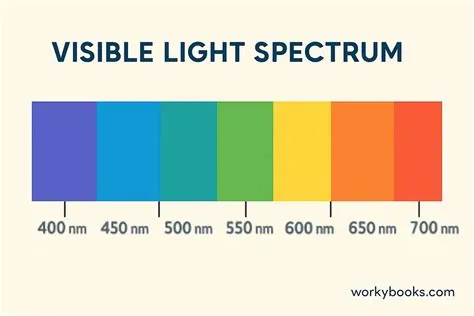
INTERIORDECOR.BIZ.ID – Light is a fundamental concept in physical science, playing a crucial role in how we perceive and interact with our universe. Its properties and behaviors are central to understanding many natural phenomena, from the colors we see to the way stars generate energy.
At its core, light is a form of electromagnetic radiation, similar to radio waves and X-rays, but with distinct characteristics. It travels as waves and also behaves as discrete packets of energy called photons. This dual nature, known as wave-particle duality, is one of the most fascinating aspects of light.
What is Light?
In physical science, light is defined as the portion of the electromagnetic spectrum that is visible to the human eye. This visible light ranges in wavelength from approximately 380 nanometers (violet) to 750 nanometers (red). Beyond these visible limits lie other forms of electromagnetic radiation, such as ultraviolet and infrared light.
The speed of light in a vacuum, denoted by ‘c’, is a universal constant, approximately 299,792,458 meters per second. This immense speed means that light can travel from the Sun to Earth in just over eight minutes.
The Electromagnetic Spectrum
The electromagnetic spectrum encompasses all forms of electromagnetic radiation, organized by their wavelength and frequency. Light, as we commonly understand it, is just a small segment of this vast spectrum.
Beyond visible light, we have radio waves (longest wavelength), microwaves, infrared radiation, ultraviolet radiation, X-rays, and gamma rays (shortest wavelength). All these forms of radiation travel at the same speed in a vacuum.
Properties of Light
Light exhibits several key properties, including reflection, refraction, diffraction, and interference. Understanding these properties helps us explain why objects have color and how optical instruments work.
Reflection occurs when light bounces off a surface, much like a ball bouncing off a wall. Refraction, on the other hand, is the bending of light as it passes from one medium to another, such as from air to water.
Wave-Particle Duality
As mentioned, light possesses both wave-like and particle-like characteristics. As a wave, it exhibits phenomena like diffraction (bending around obstacles) and interference (combining with other waves to create patterns).
As a particle, light is composed of photons, which are massless elementary particles. Each photon carries a specific amount of energy, directly proportional to the frequency of the light. This quantum nature of light is a cornerstone of modern physics.
The Importance of Light
Light from the Sun is a primary source of energy for Earth, warming our planet and driving essential processes. It is also vital for life, enabling photosynthesis in plants, which forms the base of most food chains.
For many organisms, light is a crucial tool for perceiving the world and interacting with their environment. It allows for vision, navigation, and communication, playing a role in everything from animal behavior to human communication through visual cues.
Applications of Light
The study of light has led to numerous technological advancements. Lasers, fiber optics, and digital cameras are all products of our understanding of light’s physical properties.
These technologies have revolutionized fields such as telecommunications, medicine, and manufacturing, demonstrating the profound impact of light on human society and progress.
Conclusion
In summary, light in physical science is a fundamental aspect of the electromagnetic spectrum, characterized by its wave-particle duality. Its properties allow us to see, understand the universe, and develop groundbreaking technologies.
From its role in sustaining life to its applications in advanced devices, light remains an essential and fascinating subject of scientific inquiry.
Frequently Asked Questions About Light
What is the speed of light?
The speed of light in a vacuum is a constant, approximately 299,792,458 meters per second.
Is light a wave or a particle?
Light exhibits both wave-like and particle-like properties, a phenomenon known as wave-particle duality.
What are the different types of electromagnetic radiation?
The electromagnetic spectrum includes radio waves, microwaves, infrared, visible light, ultraviolet, X-rays, and gamma rays.
Why is light important for life on Earth?
Light from the Sun provides energy for photosynthesis in plants and is essential for vision and many biological processes in organisms.
Frequently Asked Questions (FAQ)
What is the speed of light?
The speed of light in a vacuum is a constant, approximately 299,792,458 meters per second.
Is light a wave or a particle?
Light exhibits both wave-like and particle-like properties, a phenomenon known as wave-particle duality.
What are the different types of electromagnetic radiation?
The electromagnetic spectrum includes radio waves, microwaves, infrared, visible light, ultraviolet, X-rays, and gamma rays.
Why is light important for life on Earth?
Light from the Sun provides energy for photosynthesis in plants and is essential for vision and many biological processes in organisms.
Written by: Emma Johnson