
 ZeckRV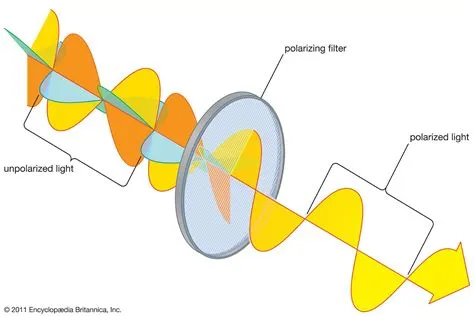
INTERIORDECOR.BIZ.ID – Light is a fundamental aspect of our universe, crucial for perception and interaction. In physics, light is defined as a form of electromagnetic radiation that is visible to the human eye. It plays a vital role in how we understand and experience the world around us. The sun’s light, for instance, warms the Earth and drives global weather patterns, initiating life-sustaining processes.
At its core, light is an electromagnetic wave. This means it consists of oscillating electric and magnetic fields propagating through space. These waves travel at an incredible speed, known as the speed of light, which is approximately 299,792 kilometers per second in a vacuum. This speed is a universal constant and one of the fastest speeds achievable.
The Dual Nature of Light
One of the most fascinating concepts in physics is the dual nature of light. Light behaves both as a wave and as a particle. As a wave, it exhibits phenomena like diffraction and interference, which are characteristic of waves. These wave-like properties explain how light bends around obstacles or how patterns can form when light passes through narrow slits.
Conversely, light also behaves as a stream of particles called photons. Photons are discrete packets of energy. This particle nature is evident in the photoelectric effect, where light can knock electrons out of a metal surface. The energy of a photon is directly proportional to the frequency of the light.
Electromagnetic Spectrum
Visible light is just a small portion of a much broader spectrum of electromagnetic radiation. This entire range is known as the electromagnetic spectrum. It includes radio waves, microwaves, infrared radiation, visible light, ultraviolet radiation, X-rays, and gamma rays. Each of these forms of radiation differs in wavelength and frequency.
The visible light spectrum, which our eyes can detect, ranges from red (longer wavelength, lower frequency) to violet (shorter wavelength, higher frequency). Colors like orange, yellow, green, and blue fall in between these extremes. White light, such as sunlight, is actually a combination of all these visible colors.
Properties of Light
Light travels in straight lines in a uniform medium. This property is why we can see shadows, as light is blocked by objects. When light encounters a different medium, such as water or glass, it can bend. This bending of light is called refraction.
Reflection is another key property of light. When light strikes a surface, it bounces off. The angle at which light hits a surface (angle of incidence) is equal to the angle at which it bounces off (angle of reflection). This principle is what allows mirrors to work.
Interaction with Matter
How light interacts with matter determines what we see. When light hits an object, it can be absorbed, reflected, or transmitted. The color of an object is determined by the wavelengths of light it reflects. For example, a red apple appears red because it absorbs most colors of visible light and reflects red wavelengths.
Transmission occurs when light passes through a material. Transparent materials, like glass, allow light to pass through with minimal scattering. Translucent materials, such as frosted glass, scatter light as it passes through, making objects behind them appear blurry. Opaque materials block light entirely.
Light and Energy
Light is a carrier of energy. The energy carried by a photon is determined by its frequency, with higher frequency photons carrying more energy. This is why ultraviolet light, which has a higher frequency than visible light, can cause sunburn.
The Sun’s light provides the Earth with the energy needed for photosynthesis, the process by which plants convert light energy into chemical energy. This process forms the base of most food chains on Earth and is essential for life.
Applications of Light
Understanding light has led to numerous technological advancements. Lasers, which produce a highly concentrated beam of light, are used in everything from barcode scanners to surgical procedures. Fiber optics, which transmit data using light signals, are the backbone of modern telecommunications.
Photography, telescopes, microscopes, and even everyday lighting systems all rely on our knowledge of light’s properties. The study of light, known as optics, continues to be a vibrant field of research with implications for new technologies and a deeper understanding of the universe.
In summary, light is a crucial form of electromagnetic radiation with a dual wave-particle nature. Its interaction with matter and its role as an energy carrier make it indispensable for life and technology. Understanding the physics of light unlocks a deeper appreciation for the world we inhabit.
Frequently Asked Questions
What is light in physics?
In physics, light is defined as a form of electromagnetic radiation that is visible to the human eye and travels as both a wave and a particle (photon).
What is the speed of light?
The speed of light in a vacuum is approximately 299,792 kilometers per second, a universal constant.
What is the electromagnetic spectrum?
The electromagnetic spectrum is the range of all types of electromagnetic radiation, including radio waves, visible light, X-rays, and gamma rays, differing in wavelength and frequency.
Does light have energy?
Yes, light carries energy, with the energy of a photon being directly proportional to its frequency.
Why is light important?
Light is essential for vision, enables photosynthesis which sustains life, and is critical for numerous technologies like telecommunications and medical imaging.
Written by: David Thomas