
 ZeckRV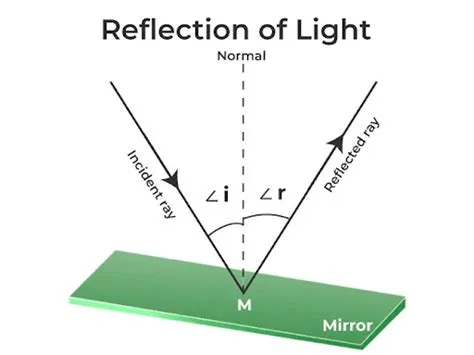
INTERIORDECOR.BIZ.ID – Light is a fundamental concept in physics, essential for our understanding of the universe and how we interact with it. In Class 8 physics, we begin to explore the nature of light, its properties, and how it behaves. Understanding light is crucial because it’s not just about seeing; light from the Sun warms our planet and drives life-sustaining processes.
For many organisms, light is the primary tool for perceiving the world and interacting with their environment. Its journey from distant stars or our local Sun allows us to navigate, find food, and communicate. The sun’s light also plays a vital role in Earth’s climate, influencing weather patterns and sustaining ecosystems.
What is Light?
At its core, light is a form of electromagnetic radiation. Think of it as energy traveling in waves, much like ripples on water, but at incredibly high speeds. This energy travels through space, including the vacuum of space, to reach our eyes. Light is part of a larger spectrum of electromagnetic waves, which includes radio waves, microwaves, and X-rays.
This electromagnetic spectrum is ordered by wavelength and frequency, with visible light occupying a small but significant portion. Each color we see, from red to violet, corresponds to a different wavelength and frequency within this visible light spectrum. Our eyes are specifically adapted to detect this range of electromagnetic energy.
The Dual Nature of Light
One of the fascinating aspects of light is its dual nature: it can behave as both a wave and a particle. This concept might seem confusing at first, but it’s a cornerstone of modern physics. When we talk about light traveling, we often describe it as a wave, exhibiting phenomena like diffraction and interference.
However, light also consists of tiny packets of energy called photons, which are particles. This particle nature is evident when light interacts with matter, such as in the photoelectric effect, where photons knock electrons out of a material. Understanding both aspects helps us explain a wider range of light phenomena.
Properties of Light
Light possesses several key properties that we study in physics. One of the most obvious is that light travels in straight lines, a concept known as rectilinear propagation. This is why shadows are formed; when an opaque object blocks light, it creates a dark area behind it where the light cannot reach.
Another important property is reflection, where light bounces off a surface. Think of a mirror; it reflects light so that you can see your own image. The angle at which light hits a surface (the angle of incidence) is equal to the angle at which it bounces off (the angle of reflection).
Refraction of Light
Refraction is the bending of light as it passes from one medium to another. This happens because light travels at different speeds in different materials. For example, light slows down when it enters water from air, causing it to bend.
This phenomenon explains why a straw in a glass of water appears bent, or why lenses in eyeglasses can correct vision. The degree of bending depends on the optical properties of the two media involved. Understanding refraction is key to designing optical instruments.
The Light Spectrum and Colors
Visible light is a spectrum of colors, often remembered by the acronym ROYGBIV: Red, Orange, Yellow, Green, Blue, Indigo, and Violet. White light, like sunlight, is actually a combination of all these colors. When white light passes through a prism, it splits into its constituent colors because each color bends at a slightly different angle due to its specific wavelength.
The color of an object we perceive is determined by which wavelengths of light it reflects or absorbs. A red apple appears red because it absorbs most colors of light and reflects red light. Black objects absorb almost all wavelengths, while white objects reflect almost all wavelengths.
Sources of Light
Light sources can be broadly categorized into luminous and non-luminous objects. Luminous objects produce their own light, such as the Sun, stars, light bulbs, and flames. These sources emit light energy through various processes, like nuclear fusion in stars or electrical excitation in a bulb.
Non-luminous objects, on the other hand, do not produce their own light but are visible because they reflect light from luminous sources. The Moon, for instance, shines by reflecting sunlight, and we see a book or a table because they reflect the light from the room’s light source.
Light and Our World
The study of light in physics Class 8 lays the foundation for understanding many natural phenomena and technological advancements. From the way our eyes work to the development of lasers and fiber optics, light is central to countless aspects of modern life.
As we continue to learn about light, we unlock deeper insights into the universe. Its ability to carry information across vast distances and its role in energy transfer make it one of the most fascinating and important subjects in science.
FAQ Section
Q1: Is light a wave or a particle?
A1: Light exhibits a dual nature, behaving as both a wave (like when it diffracts) and a particle (photons, like in the photoelectric effect).
Q2: Why does light bend when it enters water?
A2: Light bends because its speed changes when it moves from one medium (like air) to another (like water), a phenomenon called refraction.
Q3: What is the difference between luminous and non-luminous objects?
A3: Luminous objects produce their own light (e.g., the Sun), while non-luminous objects reflect light from other sources (e.g., the Moon).
Q4: What are the colors of the visible light spectrum?
A4: The visible light spectrum consists of Red, Orange, Yellow, Green, Blue, Indigo, and Violet (ROYGBIV).
Q5: How do we see the color of an object?
A5: We see the color of an object based on the wavelengths of light it reflects. For example, a red object reflects red light and absorbs other colors.
Written by: Robert Miller