
 ZeckRV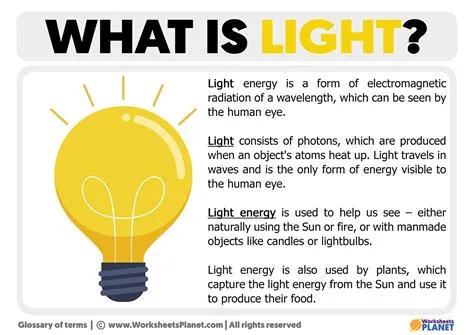
INTERIORDECOR.BIZ.ID – Light is a fundamental aspect of our universe, playing a crucial role in how we perceive and interact with our surroundings. Beyond its obvious function of illumination, light is a complex phenomenon with profound scientific implications. Its presence is essential for life as we know it, influencing everything from the planet’s temperature to biological processes.
Historically, our understanding of light has evolved significantly. Early observations focused on its visual properties, leading to basic theories about how we see. However, centuries of scientific inquiry have revealed light to be far more intricate than initially believed. It is now understood as a dual entity, exhibiting characteristics of both waves and particles.
The Dual Nature of Light
One of the most fascinating aspects of light is its wave-particle duality. This means light can behave like a wave, characterized by its frequency and wavelength, and also like a stream of particles called photons. These photons carry energy and momentum, and their behavior can be observed in various interactions with matter.
When we think of light as a wave, we consider phenomena like interference and diffraction. These properties are best explained by visualizing light as ripples spreading through space, similar to how waves travel across the surface of water. The color of light, for instance, is determined by its wavelength.
Conversely, when light interacts with matter in certain ways, such as during the photoelectric effect, it behaves as discrete packets of energy, or photons. The energy of each photon is directly proportional to the frequency of the light. This particle nature is key to understanding how light energy is transferred.
What is the Electromagnetic Spectrum?
Light, in its broader scientific definition, is a form of electromagnetic radiation. This radiation encompasses a vast spectrum of energies, with visible light being only a small portion of it. The electromagnetic spectrum includes radio waves, microwaves, infrared radiation, visible light, ultraviolet radiation, X-rays, and gamma rays.
Each type of electromagnetic radiation differs in its wavelength and frequency, which in turn dictates its energy level and how it interacts with matter. For example, radio waves have long wavelengths and low frequencies, while gamma rays have extremely short wavelengths and very high frequencies.
Visible light, the part of the spectrum that human eyes can detect, ranges from red (longer wavelength, lower frequency) to violet (shorter wavelength, higher frequency). When sunlight passes through a prism, it separates into these constituent colors, demonstrating the spectrum’s continuous nature.
How Light Interacts with Matter
The interaction of light with different materials leads to a variety of observable effects. When light strikes a surface, it can be reflected, absorbed, or transmitted. Reflection occurs when light bounces off a surface, allowing us to see objects. Absorption happens when a material takes in light energy, often converting it into heat.
Transmission, on the other hand, involves light passing through a material. Transparent materials, like glass, allow most light to pass through, while opaque materials block it entirely. Translucent materials allow some light to pass through but scatter it, making objects behind them appear blurry.
Refraction is another crucial interaction, occurring when light bends as it passes from one medium to another. This bending is due to the change in the speed of light as it enters a different substance, a phenomenon responsible for how lenses in eyeglasses or cameras work.
The Role of Light in Life and Technology
Light from the Sun is the primary energy source for Earth, driving photosynthesis in plants, which forms the base of most food chains. It also influences climate patterns and regulates sleep-wake cycles in many organisms. Beyond its natural roles, light is integral to numerous technological advancements.
From fiber optics enabling high-speed internet to lasers used in everything from surgery to barcode scanners, our modern world relies heavily on controlled manipulation of light. Understanding its properties allows us to harness its power for communication, medicine, and industry.
In essence, light is a multifaceted phenomenon that is central to our existence and technological progress. Its study continues to unveil new insights into the fundamental workings of the universe.
Frequently Asked Questions about Light
What is light made of?
Light is composed of tiny packets of energy called photons, which exhibit wave-like properties as well.
Why do we see different colors?
Different colors of visible light correspond to different wavelengths and frequencies. Our eyes detect these variations.
Can light travel through a vacuum?
Yes, light is an electromagnetic wave and can travel through the vacuum of space, unlike sound waves which require a medium.
Frequently Asked Questions (FAQ)
What is light made of?
Light is composed of tiny packets of energy called photons, which exhibit wave-like properties as well.
Why do we see different colors?
Different colors of visible light correspond to different wavelengths and frequencies. Our eyes detect these variations.
Can light travel through a vacuum?
Yes, light is an electromagnetic wave and can travel through the vacuum of space, unlike sound waves which require a medium.
Written by: Olivia Anderson