
 ZeckRV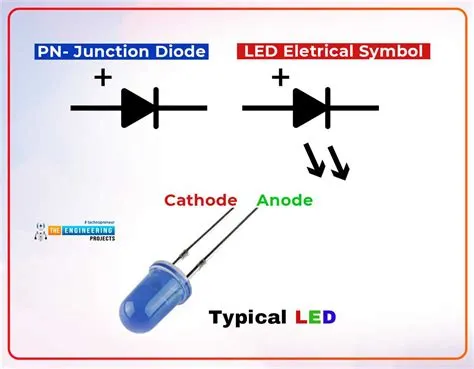
INTERIORDECOR.BIZ.ID – Light is a fundamental aspect of our existence, playing a crucial role in perception and interaction for countless organisms. From warming our planet to driving weather patterns and sustaining life, light’s influence is profound.
In the realm of artificial illumination and electronics, the light emitting diode (LED) has revolutionized how we generate and utilize light. An LED is a semiconductor device that emits light when an electric current passes through it. This process is known as electroluminescence.
What is a Light Emitting Diode (LED)?
At its core, an LED is a type of diode, which is a two-terminal electronic component that conducts current primarily in one direction. The ‘light emitting’ aspect signifies its unique ability to produce photons, or light particles, when energized.
Unlike traditional incandescent bulbs that produce light by heating a filament until it glows, LEDs generate light through a solid-state process. This fundamental difference contributes to their remarkable efficiency and longevity.
The Science Behind LED Illumination
LEDs are constructed from semiconductor materials, typically alloys of gallium, arsenic, and phosphorus. These materials are ‘doped’ with impurities to create a P-N junction, which is the heart of the diode’s operation.
When a voltage is applied in the correct direction (forward bias), electrons from the N-type semiconductor recombine with holes in the P-type semiconductor at the junction. This recombination releases energy in the form of photons, and the color of the light emitted depends on the specific semiconductor material used.
Key Components and How They Work
An LED package usually includes a semiconductor chip, a reflector to direct light, and a lens to protect the chip and shape the light output. The semiconductor chip is the active component responsible for light emission.
The reflector helps to concentrate the emitted light, increasing the overall efficiency of the device. The lens can be designed to produce different beam angles, from narrow spotlights to wide floodlights.
Advantages of LEDs
One of the most significant advantages of LEDs is their exceptional energy efficiency. They consume far less electricity than incandescent or fluorescent bulbs to produce the same amount of light.
This efficiency translates into substantial cost savings on electricity bills and a reduced environmental footprint due to lower energy consumption.
Durability and Lifespan
LEDs are also incredibly durable, as they have no filament to burn out and no glass to break. Their solid-state construction makes them resistant to shock and vibration.
Consequently, LEDs boast a significantly longer lifespan compared to traditional lighting technologies, often lasting tens of thousands of hours. This reduces the frequency of replacements and associated maintenance costs.
Applications of LEDs
The versatility of LEDs has led to their widespread adoption across numerous applications. They are commonly found in residential and commercial lighting, providing efficient and high-quality illumination.
LEDs are also integral to digital displays, from smartphones and televisions to large outdoor screens. Their ability to produce vibrant colors and precise control makes them ideal for these applications.
Beyond Illumination
In the medical field, LEDs are used in phototherapy, surgical lighting, and diagnostic equipment. Their specific wavelengths can be beneficial for treating certain conditions or enhancing visualization.
Furthermore, LEDs play a role in automotive lighting, traffic signals, and even in specialized industrial applications where reliability and specific light characteristics are paramount.
The Future of LED Technology
Research and development in LED technology continue to push the boundaries of efficiency, color rendering, and smart functionality. Innovations are leading to even brighter, more efficient, and more controllable lighting solutions.
As LEDs become more sophisticated, their integration with smart home systems and the Internet of Things (IoT) is expanding, offering new possibilities for customized lighting experiences and energy management.
Conclusion
The light emitting diode (LED) represents a significant advancement in lighting technology, offering unparalleled efficiency, longevity, and versatility. Understanding its fundamental principles and advantages highlights its importance in modern society.
From illuminating our homes to powering our digital displays and serving critical functions in various industries, LEDs continue to shape our interaction with light in transformative ways.
FAQ Section
- What is the main difference between an LED and an incandescent bulb?
- An LED is a semiconductor device that emits light through electroluminescence, while an incandescent bulb produces light by heating a filament until it glows.
- Why are LEDs considered more energy-efficient?
- LEDs convert a higher percentage of electrical energy directly into light, losing less energy as heat compared to incandescent bulbs.
- What determines the color of the light emitted by an LED?
- The color of the light is determined by the specific semiconductor material used in the LED’s construction.
- Are LEDs more durable than traditional light bulbs?
- Yes, LEDs are much more durable due to their solid-state construction, making them resistant to shock and vibration and free from fragile filaments.
- What are some common applications of LEDs?
- Common applications include general lighting, digital displays, automotive lights, traffic signals, and medical equipment.
Written by: Emma Johnson