
 ZeckRV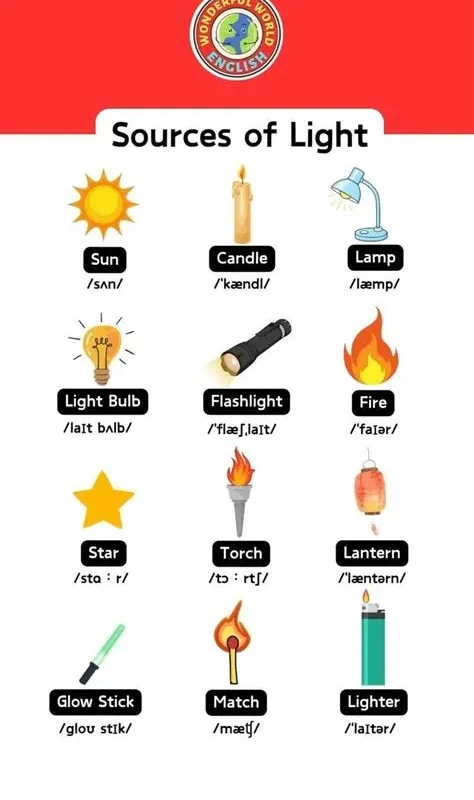
INTERIORDECOR.BIZ.ID – Light is a fundamental aspect of our existence, serving as the primary means through which many organisms perceive the world and interact with their surroundings. It is an electromagnetic wave that enables sight, drives essential biological processes, and illuminates our planet.
In simple terms, the definition of light in English refers to electromagnetic radiation within a specific portion of the electromagnetic spectrum that is visible to the human eye. This visible light is what allows us to see colors, shapes, and textures of objects around us.
The Nature of Light
Scientifically, light exhibits a dual nature, behaving as both a wave and a particle. This wave-particle duality is a cornerstone of quantum mechanics and helps explain its complex behavior. As a wave, light has properties like wavelength and frequency, which determine its color and energy.
As a particle, light is composed of discrete packets of energy called photons. These photons are massless and travel at the fastest speed possible in the universe, the speed of light, approximately 299,792 kilometers per second. This incredible speed allows light from the Sun to reach Earth in about 8 minutes.
Key Properties of Light
Several key properties characterize light, making it a unique phenomenon. These include its ability to travel in straight lines, a phenomenon known as rectilinear propagation. This is why we can observe shadows forming behind opaque objects.
Another crucial property is reflection, where light bounces off a surface. The angle at which light strikes a surface is equal to the angle at which it bounces off, a principle governing how mirrors work and how we see non-luminous objects.
Refraction is another significant property, describing how light bends as it passes from one medium to another, such as from air to water or glass. This bending occurs because light travels at different speeds in different materials, causing it to change direction.
Diffraction is the phenomenon where light waves spread out as they pass through narrow openings or around obstacles. This wave-like behavior is more pronounced when the size of the opening or obstacle is comparable to the wavelength of the light.
The Electromagnetic Spectrum
Visible light is just a small part of a much broader spectrum of electromagnetic radiation. This spectrum includes radio waves, microwaves, infrared radiation, ultraviolet radiation, X-rays, and gamma rays, all of which are forms of light but with different wavelengths and frequencies.
The Sun is a major source of light and energy for our planet. As the provided context highlights, “Light from the Sun warms the Earth, drives global weather patterns, and initiates the life-sustaining processes on Earth.” This underscores the vital role light plays beyond just vision.
Light’s Importance in Life and Technology
Photosynthesis, the process by which plants convert light energy into chemical energy, is fundamental to most ecosystems. Without light, the base of the food chain would collapse, impacting all life.
Beyond its biological significance, light is indispensable to modern technology. Lasers, fiber optics, and LED lighting are all applications that harness the properties of light to advance communication, medicine, and energy efficiency.
Interactions with Matter
When light encounters matter, it can be absorbed, transmitted, or scattered. Absorption occurs when the energy of the light is taken up by the material, often converted into heat. Transmission means the light passes through the material, as with clear glass.
Scattering is when light is dispersed in various directions upon interacting with particles or irregularities within a medium. This phenomenon is responsible for the blue color of the sky, as sunlight is scattered by molecules in the atmosphere.
Conclusion
In summary, the definition of light in English encompasses the visible portion of electromagnetic radiation, characterized by its wave-particle duality and properties like reflection, refraction, and diffraction. Its role extends from enabling vision and driving life-sustaining processes to underpinning critical technologies that shape our world.
Understanding light’s fundamental nature and its diverse interactions with matter provides a deeper appreciation for its pervasive influence on both the natural world and human innovation.
The Sun’s light is a constant reminder of its power, warming our planet and initiating the complex web of life. This radiant energy travels vast distances to sustain us.
Frequently Asked Questions about Light
What is light? Light is a form of electromagnetic radiation that allows us to see and is crucial for many natural processes.
What are the main properties of light? Key properties include rectilinear propagation, reflection, refraction, and diffraction.
Is light a wave or a particle? Light exhibits both wave-like and particle-like behavior, a concept known as wave-particle duality.
What is the electromagnetic spectrum? It’s a range of all types of electromagnetic radiation, with visible light being a small segment.
Why is light important? Light is essential for vision, photosynthesis, and numerous technological advancements.
Frequently Asked Questions (FAQ)
What is light?
Light is a form of electromagnetic radiation that allows us to see and is crucial for many natural processes.
What are the main properties of light?
Key properties include rectilinear propagation, reflection, refraction, and diffraction.
Is light a wave or a particle?
Light exhibits both wave-like and particle-like behavior, a concept known as wave-particle duality.
What is the electromagnetic spectrum?
It’s a range of all types of electromagnetic radiation, with visible light being a small segment.
Why is light important?
Light is essential for vision, photosynthesis, and numerous technological advancements.
Written by: Sophia Martinez