
 ZeckRV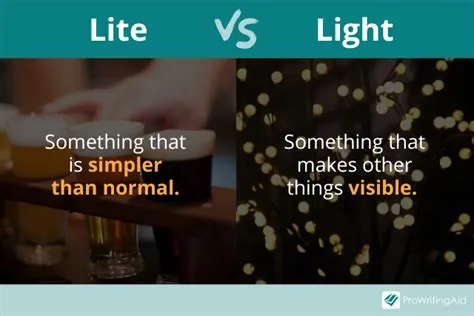
INTERIORDECOR.BIZ.ID – Light is a fundamental aspect of our universe, playing a crucial role in how we perceive and interact with our surroundings. Essentially, light is a form of electromagnetic radiation that is visible to the human eye.
It travels in waves and has a dual nature, behaving as both a wave and a particle, a concept known as wave-particle duality. This electromagnetic spectrum encompasses a wide range of wavelengths, with visible light being just a small portion of it.
What is Light?
In physics, light is defined as electromagnetic waves that are part of the electromagnetic spectrum. These waves propagate through space at an incredible speed, approximately 299,792 kilometers per second in a vacuum.
The properties of light, such as its color, intensity, and polarization, are determined by its wavelength and frequency. Different wavelengths within the visible spectrum are perceived by our eyes as different colors, from violet to red.
The Electromagnetic Spectrum
The electromagnetic spectrum includes radio waves, microwaves, infrared radiation, visible light, ultraviolet radiation, X-rays, and gamma rays. All these forms of radiation are essentially light, differing only in their wavelength and energy.
Visible light, the portion we can see, spans wavelengths from roughly 380 to 750 nanometers. When white light passes through a prism, it splits into its constituent colors, demonstrating this spectrum.
The Nature of Light
As mentioned, light exhibits wave-particle duality. As a wave, it can be reflected, refracted, and diffracted, phenomena we observe daily. As a particle, it is composed of discrete packets of energy called photons.
The energy of a photon is directly proportional to the frequency of the light. This quantum nature of light is crucial for understanding many optical phenomena and technologies.
The Significance of Light
Light from the Sun is vital for life on Earth, providing warmth and initiating many of the planet’s natural processes. Photosynthesis, the process by which plants convert light energy into chemical energy, is the foundation of most food chains.
Without sunlight, Earth would be a frozen, lifeless planet, devoid of the diverse ecosystems we know today. The energy from light drives weather patterns and sustains global climate systems.
Perception and Interaction
For many organisms, including humans, light is the primary tool for perceiving the world. Our eyes detect light, and our brains interpret these signals as images, allowing us to navigate, identify objects, and appreciate the beauty around us.
Beyond perception, light has numerous technological applications, from fiber optics used for high-speed internet to lasers used in surgery and manufacturing. The study of light, optics, continues to drive innovation.
Light and Energy
The energy carried by light can be harnessed in various ways. Solar panels convert light energy into electricity, providing a clean and renewable power source. Lasers concentrate light energy into a powerful beam.
Understanding how light interacts with matter is key to developing new materials and technologies. This interaction can range from absorption and reflection to emission and scattering.
Key Takeaways
- Light is electromagnetic radiation visible to the human eye.
- It travels as waves at the speed of light and also behaves as particles called photons.
- Visible light is a small part of the broader electromagnetic spectrum.
- Light from the Sun is essential for life, driving photosynthesis and weather.
- Light is crucial for perception, technology, and energy generation.
In summary, light is a multifaceted phenomenon with profound implications for our planet and our lives. Its dual nature and ability to carry energy make it a cornerstone of both natural processes and human innovation.
From the warmth of the sun to the intricate workings of our vision, light is an indispensable element that shapes our existence. Continued exploration of its properties promises further advancements in science and technology.
Frequently Asked Questions (FAQ)
What is the basic definition of light?
Light is a form of electromagnetic radiation that allows us to see and interact with our environment. It travels in waves and is composed of packets of energy called photons.
What is the speed of light?
Light travels at approximately 299,792 kilometers per second in a vacuum, which is the fastest speed at which anything can travel.
What is the electromagnetic spectrum?
The electromagnetic spectrum includes all forms of electromagnetic radiation, such as radio waves, microwaves, infrared, visible light, ultraviolet, X-rays, and gamma rays, differing in their wavelengths and energy.
Why is light important for life on Earth?
Light, especially from the Sun, is essential for life as it drives photosynthesis in plants, which forms the base of most food chains, and also warms the planet and influences weather patterns.
How do humans perceive light?
Our eyes detect light, and our brains interpret these signals as images, enabling us to see, recognize objects, and navigate our surroundings.
What are some technological applications of light?
Light is used in numerous technologies, including fiber optics for communication, lasers for surgery and industry, and solar panels for generating electricity.
Written by: William Clark