
 ZeckRV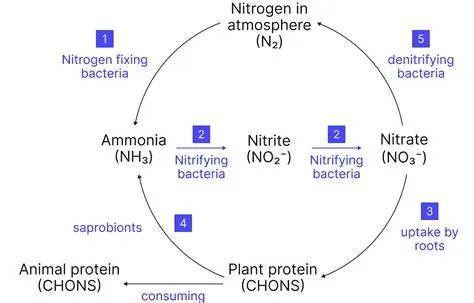
INTERIORDECOR.BIZ.ID – Light serves as a fundamental energy source for life on Earth, driving crucial biological processes. For many organisms, it is the primary means of perceiving and interacting with their environment. The Sun’s light not only warms our planet but also dictates global weather patterns and initiates life-sustaining cycles, making its role in biology indispensable.
In A-Level Biology, understanding the interplay between light and essential elements like nitrogen is key to grasping complex life processes. This article will delve into the definitions and significance of light in biological contexts and explore the critical role of nitrogen, particularly in relation to photosynthesis.
The Role of Light in Biology
Light, specifically visible light, is electromagnetic radiation that allows organisms to see and navigate their surroundings. Beyond perception, light energy is harnessed by photosynthetic organisms to convert inorganic substances into organic compounds, forming the base of most food webs.
The Sun’s energy, transmitted as light, powers global ecosystems. It fuels weather systems, regulates plant growth, and provides the initial energy input for life. Without light, photosynthesis would cease, leading to a collapse of terrestrial and aquatic food chains.
Defining Light in a Biological Context
In biology, ‘light’ refers to the portion of the electromagnetic spectrum that is visible to most animals and is utilized by plants for photosynthesis. This range typically spans from approximately 400 to 700 nanometers (nm) in wavelength.
This specific spectrum is crucial because pigment molecules, like chlorophyll, are designed to absorb light energy most efficiently within these wavelengths. Different colours within the visible spectrum have varying energy levels and are absorbed or reflected differently by plant pigments.
Photosynthesis: The Light-Dependent Process
Photosynthesis is the biological process where light energy is converted into chemical energy, stored in glucose molecules. This process is carried out by plants, algae, and cyanobacteria, providing the oxygen we breathe and the food we eat.
The primary pigment involved, chlorophyll, absorbs red and blue light most effectively and reflects green light, which is why plants appear green. This absorbed light energy is then used to split water molecules and energize electrons, initiating the synthesis of ATP and NADPH.
The Significance of Nitrogen in Photosynthesis
Nitrogen is an essential macronutrient for all life forms, playing a vital role in the structure and function of cells. It is a fundamental component of amino acids, which build proteins, and nucleic acids, like DNA and RNA.
In the context of photosynthesis, nitrogen is a critical element for synthesizing chlorophyll molecules. Chlorophyll, as mentioned, is the primary light-capturing pigment. Adequate nitrogen availability is therefore directly linked to a plant’s ability to absorb light energy efficiently.
Nitrogen’s Role in Protein Synthesis
Proteins are essential for all biological processes, including those driven by light. Enzymes involved in photosynthesis, such as RuBisCO (Ribulose-1,5-bisphosphate carboxylase/oxygenase), are proteins that catalyze key reactions in the Calvin cycle, which follows the light-dependent reactions.
Therefore, a deficiency in nitrogen can impair protein synthesis, reducing the production of essential enzymes and pigments. This directly impacts the efficiency of photosynthesis and overall plant growth.
Light and Nitrogen Deficiency Symptoms
When plants lack sufficient nitrogen, they often exhibit visible symptoms, including stunted growth and yellowing of leaves (chlorosis). This chlorosis is a direct consequence of reduced chlorophyll production.
Light energy cannot be effectively captured and converted without adequate chlorophyll. This impacts the plant’s ability to produce energy-rich sugars, further hindering growth and development. The overall photosynthetic rate decreases significantly.
Conclusion: An Interdependent Relationship
Light provides the energy, and nitrogen provides the building blocks for key molecules like chlorophyll and enzymes, enabling photosynthesis to occur. The efficient functioning of these light-dependent processes is thus intrinsically linked to the availability of nitrogen.
Understanding this interdependence is fundamental for A-Level Biology students, highlighting how environmental factors and essential nutrients collectively support the complex machinery of life. Both light availability and sufficient nitrogen are paramount for plant health and ecosystem productivity.
Frequently Asked Questions (FAQ)
What is visible light in biology?
Visible light in biology refers to the portion of the electromagnetic spectrum, typically 400-700 nm, that organisms use for vision and that plants use for photosynthesis.
Why is nitrogen important for plants?
Nitrogen is crucial for plants as it is a key component of amino acids, proteins, and nucleic acids, essential for growth and cellular function, including the synthesis of chlorophyll.
How does nitrogen deficiency affect photosynthesis?
Nitrogen deficiency leads to reduced chlorophyll production and impaired enzyme synthesis, directly lowering the efficiency of photosynthesis and plant growth.
What is chlorophyll’s role in photosynthesis?
Chlorophyll is the primary pigment that absorbs light energy, particularly red and blue wavelengths, which is then used to drive the photosynthetic process.
Can plants perform photosynthesis without light?
No, photosynthesis is fundamentally a light-dependent process; light energy is required to convert carbon dioxide and water into glucose and oxygen.
What are the symptoms of light deficiency in plants?
While not a ‘deficiency’ in the same way as a nutrient, insufficient light leads to etiolation (long, weak stems), pale leaves, and reduced flowering or fruiting due to inadequate energy for growth.
What is the role of RuBisCO in photosynthesis?
RuBisCO is an enzyme essential for the Calvin cycle, the light-independent stage of photosynthesis, where it fixes carbon dioxide into organic molecules.
Written by: Emma Johnson