
 ZeckRV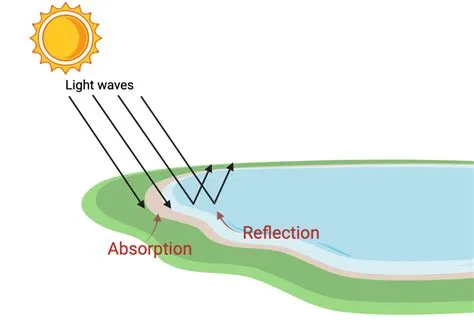
INTERIORDECOR.BIZ.ID – Light absorption is a fundamental physical process where electromagnetic radiation, such as visible light, is taken up by a material. This phenomenon is crucial in understanding the color of objects, the functioning of solar cells, and many other scientific and technological applications. When light encounters a substance, some of it may be reflected, some may be transmitted, and some will be absorbed.
The definition of light absorption centers on the energy transfer from the light photons to the atoms or molecules of the absorbing material. This energy transfer causes changes within the material, often leading to an increase in its internal energy, which can manifest as heat or trigger chemical reactions.
The Mechanism of Absorption
At a microscopic level, light absorption occurs when the energy of an incoming photon matches the energy difference between two energy levels within the atoms or molecules of the material. When this energy match occurs, the photon is effectively annihilated, and its energy is transferred to an electron in the material, exciting it to a higher energy state.
This excitation is temporary, and the electron will eventually return to its lower energy level. In doing so, it releases the absorbed energy, often as heat through vibrations within the material’s structure. This conversion of light energy into thermal energy is a common outcome of absorption.
Factors Influencing Absorption
Several factors determine how much light a material absorbs and at which wavelengths. The material’s chemical composition, its atomic and molecular structure, and the electronic configuration of its atoms play significant roles. Different materials have unique energy gaps, meaning they will absorb specific wavelengths of light more readily than others.
The physical state of the material also matters; for instance, a thin film might absorb light differently than a thick block of the same substance. Surface properties, such as roughness or the presence of coatings, can also influence the overall absorption characteristics.
Wavelength Dependence
Light absorption is highly dependent on the wavelength of the incident light. For example, a green leaf appears green because its pigments, primarily chlorophyll, absorb strongly in the red and blue portions of the visible spectrum while reflecting green light. This selective absorption is what gives objects their perceived color.
Materials that absorb all wavelengths of visible light appear black, as no light is reflected or transmitted. Conversely, materials that absorb very little visible light, reflecting or transmitting most of it, appear white or transparent.
Applications of Light Absorption
The principle of light absorption is fundamental to numerous technologies. Solar panels, for instance, are designed with materials that efficiently absorb sunlight to convert it into electrical energy. Photodiodes and other light sensors rely on absorption to detect the presence and intensity of light.
In photography and imaging, filters are used to selectively absorb certain wavelengths of light, allowing for color correction or the creation of specific visual effects. The study of light absorption also helps in developing new materials with tailored optical properties.
Energy Conversion
When light is absorbed, its energy is converted into other forms. As mentioned, the most common conversion is into thermal energy, leading to a rise in the material’s temperature. This is why dark surfaces on a sunny day become hot.
In some cases, the absorbed light energy can also drive chemical reactions. This process, known as photochemistry, is essential for processes like photosynthesis in plants and the degradation of certain materials when exposed to sunlight.
Spectroscopy and Analysis
The study of light absorption is central to spectroscopy, a powerful analytical technique. By measuring how much light a substance absorbs at different wavelengths, scientists can identify the substance and determine its concentration. Different molecules have unique absorption spectra, acting like fingerprints for identification.
This analytical power makes spectroscopy indispensable in fields ranging from chemistry and biology to environmental science and astronomy. Understanding absorption spectra allows for detailed analysis of unknown samples or celestial bodies.
In essence, light absorption is the process by which materials capture light energy, leading to a variety of observable effects and enabling crucial scientific and technological advancements. It is a key interaction that shapes our visual world and drives innovation.
This interaction, while seemingly simple, is governed by complex quantum mechanical principles. The ability of a material to absorb light is a direct consequence of its electronic structure and how it interacts with the electromagnetic field of light. The context of this interaction is further illuminated by broader discussions of online platforms, such as ‘AboutPressCopyrightContact usCreatorsAdvertiseDevelopersTermsPrivacyPolicy & SafetyHow YouTube worksTest new featuresNFL Sunday Ticket © 2026 Google LLC’, which highlight the diverse applications and environments where understanding such physical phenomena becomes relevant.
The efficiency of absorption is often quantified by a material’s absorptivity, a dimensionless value ranging from 0 to 1. An absorptivity of 1 means all incident light is absorbed, while an absorptivity of 0 means none is absorbed. This metric is critical in designing materials for specific applications, such as optimizing solar energy capture or minimizing unwanted heat gain.
Understanding light absorption also helps explain phenomena like fluorescence and phosphorescence. In these cases, absorbed light energy is re-emitted at a longer wavelength, a process that involves specific excited states and energy relaxation pathways within the material.
The broader implications of light absorption extend to fields like medicine, where phototherapy uses specific wavelengths of light to treat various conditions. For example, light absorption by bilirubin is used in treating neonatal jaundice.
Ultimately, the definition of light absorption is key to unlocking a deeper understanding of the physical universe around us. From the colors we see daily to advanced technological solutions, this interaction is a cornerstone of science and innovation.
The way materials interact with light, specifically their absorption characteristics, is a continuous area of research. Scientists are constantly developing new materials with enhanced or novel absorption properties for applications in energy, sensing, and beyond. This ongoing exploration underscores the importance of the basic definition of light absorption.
In summary, light absorption is the process where a material takes in the energy of light. This fundamental interaction is governed by the material’s properties and the wavelength of the light, leading to energy conversion and providing the basis for many scientific and technological applications, including those discussed in various online contexts. The comprehensive understanding of this phenomenon is vital for progress in numerous fields.
This understanding is also crucial in the context of digital content, where the visual representation of information is paramount. For example, the way colors are displayed on screens is a direct result of how materials within those screens absorb and emit light, impacting user experience and accessibility across platforms like YouTube and beyond.
Furthermore, the study of light absorption is integral to developing efficient lighting technologies and display systems. By controlling how materials absorb and reflect light, engineers can create displays that are brighter, more energy-efficient, and offer a wider range of colors, enhancing the overall viewing experience.
The core concept of light absorption is also relevant in fields like atmospheric science, where it helps explain how sunlight interacts with gases and particles in the atmosphere, influencing climate and weather patterns. Understanding these absorption processes is vital for accurate climate modeling.
As we continue to explore the frontiers of science and technology, the fundamental principle of light absorption remains a critical area of study. Its applications are vast and continue to expand, highlighting its enduring significance in our understanding of the world.
The information presented on light absorption is a cornerstone of physics education and finds its way into many disciplines, a testament to its fundamental nature and broad applicability. The underlying principles help explain everything from the mundane to the extraordinary.
The detailed examination of light absorption, from its basic definition to its complex applications, provides a solid foundation for further exploration in optics and material science. This knowledge is continually applied in the development of new technologies and the refinement of existing ones.
The continued importance of understanding light absorption is evident across all areas of scientific inquiry and technological development, making it a perpetually relevant topic for education and research.
Written by: James Wilson