
 ZeckRV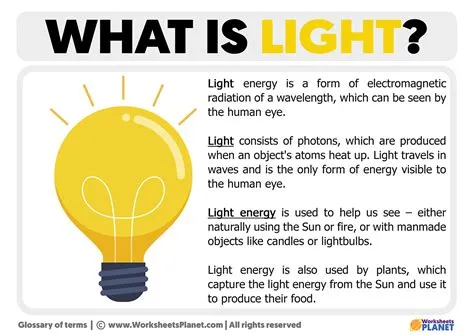
INTERIORDECOR.BIZ.ID – Light is a fundamental concept in science, crucial for our understanding of the universe and how we perceive it. For many organisms, light is the primary tool for interacting with their environment. The Sun, our closest star, is a massive source of light that warms our planet and drives weather systems.
Class 7 science typically introduces light as a form of energy that travels in waves. These waves are part of the electromagnetic spectrum, which includes radio waves, microwaves, infrared radiation, visible light, ultraviolet radiation, X-rays, and gamma rays. Visible light, the portion we can see, is what allows us to observe the world around us.
What is Light?
Scientifically, light is defined as electromagnetic radiation within the segment of the electromagnetic spectrum that is visible to the human eye. This means it has both electric and magnetic properties and travels at an incredibly high speed.
Think of it like ripples on a pond, but instead of water, it’s an electromagnetic disturbance traveling through space. Light can travel through a vacuum, like the vastness of space, without needing a medium.
Properties of Light
One of the most basic properties of light is that it travels in straight lines. This is why we can see shadows formed when an object blocks the path of light.
This straight-line travel is often referred to as the rectilinear propagation of light. It’s a concept that helps explain phenomena like eclipses and the formation of images in pinhole cameras.
Light also exhibits wave-like behavior, meaning it can bend and spread out. This property is known as diffraction and can be observed when light passes through a narrow slit or around an obstacle.
Furthermore, light can be reflected and refracted. Reflection is when light bounces off a surface, like a mirror, while refraction is when light bends as it passes from one medium to another, such as from air into water.
Sources of Light
Objects that produce their own light are called luminous objects. The most prominent example for us on Earth is the Sun, which generates light through nuclear fusion reactions within its core.
Other luminous sources include stars, light bulbs, and fireflies. These objects convert different forms of energy into light energy.
Objects that do not produce their own light are called non-luminous objects. These objects are visible because they reflect light from luminous sources. For example, the Moon appears bright because it reflects sunlight.
Our own bodies are non-luminous. We see them because light from surrounding sources, like lamps or windows, reflects off our skin and clothes into our eyes.
Interaction of Light with Matter
When light strikes an object, several things can happen: it can be reflected, absorbed, or transmitted. The way light interacts with a material determines how we perceive that material.
Absorption occurs when an object takes in light energy, often converting it into heat. Dark-colored objects tend to absorb more light than lighter-colored ones.
Transmission is when light passes through a material. Transparent materials, like glass, allow most light to pass through, enabling clear vision. Translucent materials, like frosted glass, allow some light to pass through but scatter it, making objects behind them appear blurry.
Colors and Light
The colors we see are a result of how objects interact with visible light. White light, like sunlight, is actually a mixture of all the colors of the rainbow (red, orange, yellow, green, blue, indigo, and violet).
When white light hits a red apple, the apple’s surface absorbs all colors except red, which it reflects back to our eyes. This is why we perceive the apple as red.
The Importance of Light
Light is indispensable for life on Earth. Photosynthesis, the process by which plants create their own food, relies heavily on light energy from the Sun.
Beyond sustenance, light allows us to see, learn, and explore. It plays a vital role in navigation, communication, and countless technological advancements.
Faq Section
Frequently Asked Questions About Light
-
Question: What is the speed of light?
Answer: The speed of light in a vacuum is approximately 299,792 kilometers per second (about 186,282 miles per second), which is the fastest speed anything can travel in the universe. -
Question: What is the difference between reflection and refraction?
Answer: Reflection is the bouncing of light off a surface, while refraction is the bending of light as it passes from one medium to another. -
Question: Why are some objects see-through and others are not?
Answer: This depends on how the object transmits light. Transparent objects allow light to pass through clearly, translucent objects scatter light, and opaque objects block light from passing through. -
Question: How does light create color?
Answer: Objects appear colored because of the wavelengths of light they reflect. White light contains all colors, and an object’s surface absorbs some wavelengths and reflects others, which we then perceive as color.
Written by: Michael Brown