
 ZeckRV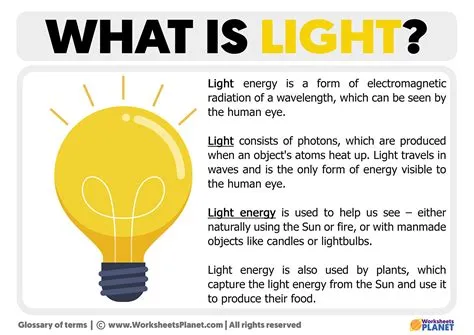
INTERIORDECOR.BIZ.ID – Light is a fundamental phenomenon that allows us to perceive and interact with the world around us. It is a form of electromagnetic radiation that our eyes can detect, playing a crucial role in countless natural processes. Without light, our visual experience of the universe would be impossible.
As of February 6, 2026, it is widely understood that light is a primary tool for perceiving the world and interacting with it for many organisms. Light from the Sun not only illuminates our planet but also provides the energy necessary for life to thrive.
What is Light?
In essence, light can be defined as a form of energy that travels in waves. These waves are part of the electromagnetic spectrum, which includes radio waves, microwaves, infrared radiation, visible light, ultraviolet radiation, X-rays, and gamma rays. Visible light is the narrow band of this spectrum that human eyes are sensitive to.
Scientifically, light exhibits a dual nature, behaving as both a wave and a particle. This wave-particle duality is a cornerstone of quantum mechanics. As a wave, it has properties like wavelength and frequency. As a particle, it is composed of discrete packets of energy called photons.
Key Properties of Light
One of the most notable properties of light is its speed. Light travels at an astonishing speed of approximately 299,792 kilometers per second (or 186,282 miles per second) in a vacuum. This makes it the fastest known entity in the universe.
Another critical property is its propagation in straight lines, known as rectilinear propagation. This is why we can observe shadows cast by objects. Light rays travel unimpeded in a homogeneous medium until they encounter a surface or another medium.
Reflection and Refraction
When light strikes a surface, it can be reflected or absorbed. Reflection is the bouncing back of light rays from a surface, which is how mirrors work. The angle at which light hits a surface is equal to the angle at which it bounces off, according to the law of reflection.
Refraction, on the other hand, is the bending of light as it passes from one medium to another. This phenomenon occurs because the speed of light changes in different materials, like water or glass. This bending is responsible for the apparent distortion of objects seen through a glass of water.
Dispersion and Interference
Dispersion is the separation of white light into its constituent colors when it passes through a prism or water droplets, as seen in a rainbow. This happens because each color of light has a slightly different wavelength and is therefore refracted at a slightly different angle.
Interference is a phenomenon where two or more light waves overlap and combine. This can result in either an increase in intensity (constructive interference) or a decrease in intensity (destructive interference), leading to patterns of bright and dark bands.
The Importance of Light
Light from the Sun is the primary energy source for Earth, driving global weather patterns and the water cycle. It is indispensable for photosynthesis, the process by which plants convert light energy into chemical energy, forming the base of most food chains.
Beyond its biological and physical roles, light is essential for human perception and daily life. It enables us to see, read, work, and navigate our environment. Artificial light sources have extended our capabilities, allowing for activities after sunset and in dark environments.
Applications of Light
The understanding of light has led to numerous technological advancements. Lasers, for instance, utilize the principles of stimulated emission to produce highly focused beams of light with diverse applications in medicine, industry, and telecommunications.
Fiber optics, which transmit data using light pulses through glass or plastic fibers, have revolutionized communication networks. The development of LEDs (Light Emitting Diodes) has also transformed lighting technology, offering energy efficiency and longevity.
Conclusion
In summary, light is a complex yet vital form of energy with profound implications for our planet and its inhabitants. Its dual nature as a wave and particle, coupled with properties like speed, reflection, and refraction, underpins many natural phenomena and technological innovations.
Understanding the definition and properties of light continues to be an area of active scientific research, promising further discoveries and applications that will shape our future. It is truly the illumination that guides our understanding of the universe.
FAQ Section:
- What is the speed of light? Light travels at approximately 299,792 kilometers per second in a vacuum.
- What is the difference between reflection and refraction? Reflection is when light bounces off a surface, while refraction is when light bends as it passes through different mediums.
- Why is light important for life on Earth? Light from the Sun provides energy for photosynthesis, which is the foundation of most food chains, and also drives weather patterns.
- What are photons? Photons are discrete packets of energy that constitute light, illustrating its particle nature.
Written by: James Wilson