
 ZeckRV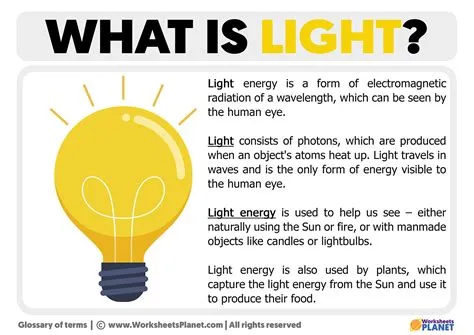
INTERIORDECOR.BIZ.ID – Light is a fundamental part of our existence, enabling us to see and interact with the world around us. For many organisms, light is the primary tool for perceiving their surroundings and navigating through life. Without light, our ability to understand and experience our environment would be severely limited.
The sun, a powerful source of light, plays a crucial role in our planet’s ecosystem. It not only illuminates our days but also warms the Earth, drives weather patterns, and initiates the very processes that sustain life. Understanding light helps us appreciate these vital natural phenomena.
What is Light?
Scientifically, light is a form of electromagnetic radiation that our eyes can detect. It travels in waves and also behaves like tiny packets of energy called photons. Think of it like ripples on a pond, but these ripples are made of energy and can travel through empty space.
These waves have different wavelengths, and it’s the wavelength that determines the color we perceive. For instance, red light has a longer wavelength than blue light, making it appear differently to our eyes.
The Electromagnetic Spectrum
Light is just a small part of a much larger spectrum known as the electromagnetic spectrum. This spectrum includes various forms of radiation, such as radio waves, microwaves, infrared radiation, visible light, ultraviolet radiation, X-rays, and gamma rays.
Our eyes are sensitive only to the visible light portion of this spectrum, which is why we can see colors. Other parts of the spectrum, like infrared (heat) or ultraviolet (which can cause sunburn), are invisible to us.
How Light Travels
Light travels in straight lines, a concept known as rectilinear propagation. Imagine a flashlight beam; it travels outwards in a straight path until it hits something. This straight-line travel is why we can cast shadows.
When light encounters an object, several things can happen: it can be reflected, absorbed, or transmitted. Understanding these interactions helps explain phenomena like seeing objects and the formation of shadows.
Reflection and Mirrors
Reflection occurs when light bounces off a surface. This is how we see most objects; light from a source hits the object and then bounces towards our eyes. Mirrors are specifically designed to reflect light very efficiently, allowing us to see clear images.
The law of reflection states that the angle at which light hits a surface (angle of incidence) is equal to the angle at which it bounces off (angle of reflection). This principle is fundamental to how mirrors work.
Absorption and Color
Absorption happens when a surface takes in light energy. A black object appears black because it absorbs most of the visible light that falls on it, converting it into heat. Conversely, a white object reflects most of the light, making it appear bright.
The color of an object is determined by the wavelengths of light it reflects. A red apple appears red because its surface absorbs all colors of light except red, which it reflects into our eyes.
Refraction and Lenses
Refraction is the bending of light as it passes from one medium to another, such as from air to water. This happens because light travels at different speeds in different materials. Think of a straw appearing bent when placed in a glass of water.
Lenses, like those in our eyes or in glasses, work by refracting light to focus it. This bending allows us to see clearly and is essential for vision correction and various optical instruments.
Light and Life
Light is indispensable for life on Earth. Plants use sunlight for photosynthesis, the process that converts light energy into chemical energy in the form of food. This forms the base of most food chains.
Furthermore, light influences the behavior of many animals, helping them find food, navigate, and avoid predators. The daily cycle of light and darkness also regulates the biological rhythms of most living things.
The Importance of Sunlight
Sunlight provides the energy that warms our planet, regulating global temperatures and driving weather systems. It is the ultimate source of energy for almost all life on Earth, directly or indirectly.
Beyond its physical effects, sunlight also affects our mood and well-being. Exposure to sunlight helps our bodies produce Vitamin D, which is essential for bone health.
Sources of Light
There are two main types of light sources: luminous and non-luminous. Luminous objects produce their own light, like the sun, stars, light bulbs, and fireflies. These are the primary sources that illuminate our world.
Non-luminous objects, on the other hand, do not produce their own light but are visible because they reflect light from luminous sources. The moon, for example, is non-luminous; we see it because it reflects sunlight.
Natural vs. Artificial Light
We experience light from both natural and artificial sources. Natural light comes from the sun, stars, and even lightning. These sources have been illuminating the Earth for billions of years.
Artificial light is man-made and includes sources like incandescent bulbs, fluorescent lights, LEDs, and lasers. These inventions have allowed us to extend our activities beyond daylight hours and illuminate our homes and cities.
Conclusion
In summary, light is a vital electromagnetic wave that allows us to see, warms our planet, and powers life. Understanding its properties, such as how it travels, reflects, refracts, and is absorbed, helps us comprehend the world around us.
From the simple act of seeing an object to the complex processes of photosynthesis and weather patterns, light is an indispensable element that shapes our planet and all its inhabitants. Its study opens doors to understanding physics and the wonders of the universe.
Frequently Asked Questions (FAQ)
Question: What is light in simple terms?
Answer: Light is a form of energy that travels in waves and allows us to see. It’s like invisible energy waves that our eyes can detect, making colors and objects visible.
Question: Where does light come from?
Answer: Light can come from natural sources like the Sun and stars, or from artificial sources created by humans, such as light bulbs and lamps.
Question: Why do we see different colors?
Answer: We see different colors because objects reflect different wavelengths of light. What we perceive as a color is the light that bounces off an object and reaches our eyes.
Question: What happens when light hits a mirror?
Answer: When light hits a mirror, it bounces off, which is called reflection. This is how mirrors create images.
Question: Does light travel in a straight line?
Answer: Yes, light generally travels in straight lines. This is why shadows are formed when an object blocks the path of light.
Question: What is refraction?
Answer: Refraction is when light bends as it passes from one substance to another, like from air to water. This happens because light changes speed in different materials.
Question: Why is light important for plants?
Answer: Plants use light from the Sun for photosynthesis, a process that helps them make their own food and grow.
Question: What is the difference between luminous and non-luminous objects?
Answer: Luminous objects produce their own light, like a light bulb. Non-luminous objects do not produce light but can be seen when they reflect light from other sources, like the Moon.
Written by: Sophia Martinez