
 ZeckRV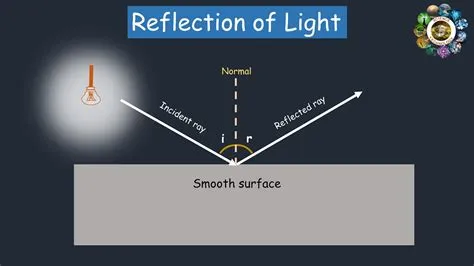
INTERIORDECOR.BIZ.ID – Light is a fundamental phenomenon that plays a crucial role in how we perceive and interact with the world around us. For countless organisms, light serves as the primary tool for understanding their environment and engaging with it effectively. Beyond perception, light from celestial bodies like the Sun significantly influences our planet.
The Sun’s radiant energy, for instance, warms the Earth’s surface, driving global weather patterns and initiating the complex processes essential for life’s sustenance. Scientifically, light is understood as a form of electromagnetic radiation, a spectrum of energy that travels in waves. This electromagnetic spectrum encompasses a vast range of frequencies, from radio waves with long wavelengths to gamma rays with extremely short wavelengths.
The Nature of Light
Within this spectrum, the portion we can see with our eyes is known as visible light. Visible light is characterized by its wavelengths, which determine the colors we perceive. Red light has longer wavelengths, while violet light has shorter wavelengths, with all the colors of the rainbow falling in between.
A key concept in understanding light is its dual nature, often described as wave-particle duality. This means that light can behave both as a wave and as a particle, called a photon. As a wave, light exhibits properties like diffraction and interference, similar to water waves.
Conversely, as a particle, a photon carries discrete packets of energy. The energy of a photon is directly proportional to the frequency of the light; higher frequency light, such as blue or violet, carries more energy per photon than lower frequency light, like red.
How Light Interacts with Matter
When light encounters matter, several interactions can occur, influencing how we see objects and how energy is transferred. Reflection is when light bounces off a surface, a phenomenon that allows us to see objects that do not emit their own light.
Refraction, on the other hand, is the bending of light as it passes from one medium to another, such as from air into water. This bending occurs because light travels at different speeds in different materials, a property quantified by the refractive index of the material.
Absorption is another critical interaction, where the energy of light is taken up by the material. This absorption can lead to heating, as is the case when sunlight warms the Earth, or it can trigger chemical reactions, such as in photosynthesis.
Scattering occurs when light is deflected in various directions upon hitting particles or irregularities in a medium. Rayleigh scattering, for example, explains why the sky appears blue, as shorter blue wavelengths of sunlight are scattered more effectively by atmospheric molecules.
Applications of Light in Science and Technology
The scientific understanding of light has led to numerous technological advancements that shape our modern world. Optics, the branch of physics that studies light and its properties, is fundamental to the development of lenses, telescopes, microscopes, and cameras.
Lasers, which produce a highly focused and coherent beam of light, have applications ranging from medical surgery to data storage and telecommunications. The precise manipulation of light enables intricate scientific research and everyday conveniences.
In biology, light is essential for photosynthesis, the process by which plants convert light energy into chemical energy to fuel their growth. This process forms the base of most food chains on Earth, highlighting light’s indispensable role in the biosphere.
Furthermore, understanding light’s spectrum has enabled the development of technologies like spectroscopy, which analyzes the interaction of light with matter to identify substances and study their composition, from distant stars to microscopic particles.
Light as a Wave Phenomenon
As a wave, light exhibits characteristic behaviors. Wavelength, the distance between successive crests of a wave, determines its color in the visible spectrum and its energy level. Frequency, the number of waves that pass a point per second, is inversely related to wavelength and directly related to energy.
These wave properties are observable in phenomena like interference, where two waves combine to form a resultant wave of greater, lower, or the same amplitude. Diffraction, the bending of waves around obstacles, also demonstrates light’s wave-like nature.
Understanding light’s wave properties is crucial for fields like interferometry and holography, which rely on the precise control and measurement of light waves. These principles underpin technologies that require incredibly high precision and resolution.
Light’s Role Beyond the Visible
While visible light is what our eyes detect, the electromagnetic spectrum extends far beyond this narrow band. Ultraviolet (UV) light, for instance, has shorter wavelengths and higher energy than visible light, playing a role in vitamin D production in humans but also causing sunburn.
Infrared (IR) radiation, with longer wavelengths and lower energy than visible light, is perceived as heat. This form of radiation is utilized in thermal imaging, remote controls, and heating devices. It is also the mechanism by which the Sun warms our planet.
Beyond UV and IR, the spectrum includes microwaves, radio waves, X-rays, and gamma rays, each with unique properties and applications in science, medicine, and communication. Studying these different forms of light allows scientists to probe the universe, diagnose illnesses, and transmit information across vast distances.
In summary, light is a multifaceted physical entity with profound implications for both the natural world and human innovation. Its wave-particle duality, interactions with matter, and broad spectrum presence make it an essential subject of scientific study and a cornerstone of modern technology and life itself.
From the warming rays of the Sun to the precise beams used in lasers, light’s influence is pervasive. Its ability to carry energy and information across space makes it a vital medium for everything from biological processes to astronomical observation and communication systems.
Frequently Asked Questions (FAQ)
What is the scientific definition of light?
Scientifically, light is defined as a form of electromagnetic radiation that exhibits both wave-like and particle-like properties. It is part of the electromagnetic spectrum and travels at a constant speed in a vacuum.
What are the two main properties of light?
Light exhibits wave-particle duality, meaning it can behave as both a wave (showing properties like diffraction and interference) and as a particle (in discrete packets of energy called photons).
How does light interact with matter?
Light interacts with matter through reflection (bouncing off), refraction (bending through), absorption (being taken in), and scattering (deflecting in various directions).
What is the visible light spectrum?
The visible light spectrum is the portion of the electromagnetic spectrum that the human eye can detect. It ranges from red (longer wavelengths) to violet (shorter wavelengths), encompassing all the colors of the rainbow.
What are some applications of understanding light?
Understanding light has led to advancements in optics, lasers, microscopes, telescopes, photography, telecommunications, medical imaging, and is fundamental to biological processes like photosynthesis.
Written by: William Clark