
 ZeckRV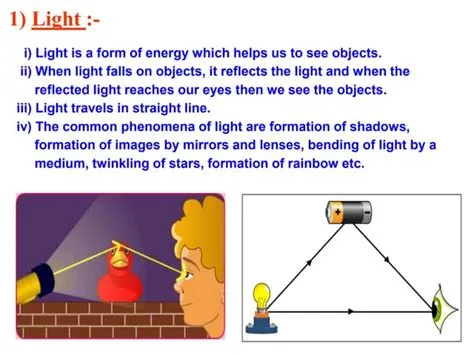
INTERIORDECOR.BIZ.ID – Light is a fundamental part of our universe, allowing us to see the world around us and interact with it. For many organisms, it’s a primary tool for survival, providing warmth and enabling essential processes like photosynthesis. Think of light as the messenger that carries information about our surroundings directly to our eyes.
Scientifically, light is a form of energy that travels in waves. These waves are part of a larger group called the electromagnetic spectrum. Imagine a wide range of waves, from radio waves used in broadcasting to X-rays used in medical imaging; light is a specific, visible portion of this vast spectrum.
The Nature of Light Waves
Light waves have properties like wavelength and frequency. Wavelength is the distance between two consecutive peaks of a wave, while frequency is the number of waves that pass a point in a second. These properties determine the color of light we see and its energy level.
Different wavelengths of light correspond to different colors. For example, red light has a longer wavelength and lower frequency than blue light, which has a shorter wavelength and higher frequency. Our eyes can detect this range of wavelengths and interpret them as colors.
Visible Light: What We See
The light we can see, known as visible light, is a small part of the electromagnetic spectrum. It ranges from violet to red, often remembered by the acronym ROYGBIV (Red, Orange, Yellow, Green, Blue, Indigo, Violet).
When white light, like sunlight, passes through a prism, it separates into its constituent colors. This phenomenon, called dispersion, demonstrates that white light is actually a combination of all the colors of the visible spectrum.
Sources of Light
Light can be produced in different ways, either naturally or artificially. Natural sources include the Sun, stars, and lightning, providing light that has been essential for life on Earth for billions of years.
Artificial sources include light bulbs, LEDs, and lasers, which we create to illuminate our homes, cities, and for various technological applications. These sources convert other forms of energy, like electricity, into light.
How Light Travels
Light travels in straight lines, a concept known as the rectilinear propagation of light. This is why shadows are formed; an opaque object blocks the path of light, creating a dark area behind it.
When light encounters a surface, it can be reflected, refracted, or absorbed. Reflection is when light bounces off a surface, like a mirror. Refraction is when light bends as it passes from one medium to another, such as from air to water, which is why a straw in a glass of water appears bent.
Interaction with Matter
The way light interacts with matter determines what we see. Objects are visible because they either emit light or reflect it. A luminous object, like a light bulb, emits its own light, while a non-luminous object, like a book, reflects light from another source.
Different materials interact with light differently. Transparent materials, like glass, allow light to pass through them easily. Translucent materials, like frosted glass, scatter light, making objects behind them appear blurry. Opaque materials, like wood, block light entirely, preventing us from seeing through them.
The Importance of Light
Light from the Sun warms our planet and drives weather patterns, playing a crucial role in Earth’s climate. It’s also the energy source for plants through photosynthesis, the process that creates food for most life on Earth.
Beyond its scientific and biological importance, light allows us to explore, communicate, and create. It enables art, photography, and the countless technologies that shape our modern world, making it truly indispensable.
Frequently Asked Questions about Light
Written by: Sophia Martinez