
 ZeckRV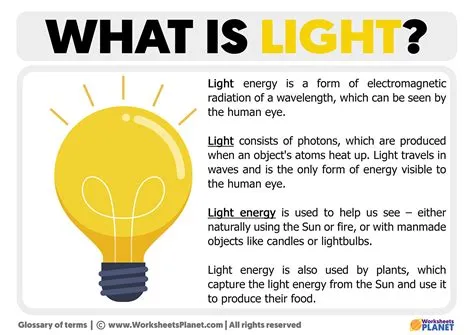
INTERIORDECOR.BIZ.ID – Light is a fundamental element of our existence, enabling sight and influencing countless natural processes. For millennia, humanity has sought to understand its nature, with early philosophical inquiries often rooted in the wisdom of ancient Greece. The very word ‘light’ in English has connections to ancient languages, reflecting a long history of human curiosity about this pervasive phenomenon. Understanding the etymological origins can offer a unique perspective on how our perception of light has evolved.
The word ‘light’ in English originates from the Proto-Germanic word *’leukhtam’*, which itself has deeper roots in the Proto-Indo-European root *’lewk-‘*. This ancient root signifies ‘brightness’ or ‘to shine’. While not directly Greek, this linguistic connection highlights a universal human experience of observing radiant phenomena.
The Greek Conception of Light
Ancient Greek thinkers were among the first to systematically ponder the nature of light, attempting to reconcile empirical observations with philosophical reasoning. Their ideas, though often differing from modern scientific understanding, laid crucial groundwork for future investigations. Many of their concepts were intertwined with their broader cosmological and metaphysical views.
A key concept in ancient Greek thought regarding vision was the ’emission theory’. Philosophers like Empedocles proposed that vision occurred when rays of light, or visual fires, were emitted from the eyes and touched objects. This theory suggested that the eye was an active participant in the act of seeing, rather than a passive recipient of external stimuli.
Plato, in his famous Allegory of the Cave, used light as a metaphor for knowledge and enlightenment. He depicted prisoners chained in a cave, only able to see shadows cast by objects illuminated by a fire. Escaping the cave and seeing the sun represented the journey from ignorance to true understanding, with light symbolizing truth and reason. This philosophical use of light profoundly influenced Western thought.
Aristotle’s Contribution
Aristotle, while disagreeing with the emission theory, offered his own perspective on light and color. He viewed light not as a separate entity but as a quality or activity of a transparent medium, like air or water. For him, color was a property of objects themselves, derived from the presence or absence of light. He also described light as a potentiality that is actualized in a medium.
Aristotle’s ideas were influential for centuries, shaping scientific inquiry even as they differed from modern wave and particle theories of light. His emphasis on empirical observation, however, remained a cornerstone of scientific methodology. He meticulously observed how light interacted with different materials, providing a foundation for future studies.
Light in Modern Physics
Fast forward to the modern era, and our understanding of light has dramatically evolved, thanks to scientific advancements and sophisticated experimentation. We now know light to be an electromagnetic wave and also a stream of particles called photons. This dual nature, known as wave-particle duality, is a cornerstone of quantum mechanics.
The Greek term for light, phōs (φῶς), is still deeply relevant in scientific contexts today. For instance, the study of light is called ‘optics‘, derived from the Greek word ‘optikos’, meaning ‘visual’ or ‘to see’. This etymology directly links our scientific pursuit of understanding light back to its ancient Greek roots and the fundamental human desire to comprehend vision.
Modern optics explores phenomena such as refraction, reflection, diffraction, and interference, all of which are explained by the wave nature of light. These concepts help us understand how lenses work in telescopes and microscopes, and how rainbows are formed in the sky after a rain shower. The predictable behavior of light waves allows for technological innovation.
The particle nature of light, described by photons, explains phenomena like the photoelectric effect. This effect, where light striking a metal surface can eject electrons, demonstrated that light energy comes in discrete packets. This discovery was crucial for the development of quantum physics and technologies like solar cells and digital cameras.
The ancient Greeks grappled with the fundamental questions of light’s existence and its role in perception. While their explanations were based on philosophical reasoning rather than empirical measurement, their inquiries sparked a tradition of scientific curiosity. Their terms and concepts continue to echo in modern scientific discourse.
From the early philosophical musings in Athens to the sophisticated laboratories of today, the quest to understand light continues. Its role extends far beyond mere illumination; it is crucial for photosynthesis, driving weather patterns, and indeed, initiating life-sustaining processes on Earth, as highlighted by its role in warming our planet and enabling biological functions.
The journey from the ancient Greek concepts of visual fires to the modern understanding of electromagnetic waves and photons is a testament to human intellectual progress. The study of light, rooted in ancient curiosity, remains a vibrant and essential field of scientific exploration. This ongoing fascination underscores light’s profound impact on both the natural world and our ability to comprehend it.
The word ‘light’ itself, while having Germanic origins, carries a conceptual weight forged over centuries of human observation and thought. The Greek language, rich with terms related to perception and the cosmos, provided a philosophical framework for understanding phenomena like light. The legacy of their intellectual endeavors is undeniable.
In conclusion, tracing the definition and understanding of light from its Greek philosophical roots to its current scientific explanation reveals a remarkable intellectual journey. The terms we use today, like ‘optics’, are direct descendants of this ancient lineage, underscoring the enduring power of classical thought in shaping our modern scientific landscape. Light remains a central focus, from warming the Earth to enabling sight.
As we continue to explore the universe, light remains our primary messenger, carrying information across vast distances and through time. The efforts of ancient Greek thinkers, in their own way, contributed to the ongoing human endeavor to decipher these cosmic messages. Their philosophical discussions were the nascent steps towards a complex scientific understanding.
The interplay between ancient philosophy and modern science regarding light is a powerful example of how fundamental questions can endure and evolve. The Greek fascination with visual phenomena laid the conceptual groundwork for the scientific exploration of optics and electromagnetism. This historical perspective enriches our appreciation for the complex nature of light itself.
The fundamental concepts explored by the Greeks, such as the interaction of light with matter and its role in perception, are still central to optical physics. While the methodologies have changed dramatically, the core questions about light’s essence persist. This continuity highlights the profound impact of early intellectual traditions.
Therefore, when we discuss ‘light definition greek’, we are not just exploring etymology but a rich history of human thought and inquiry. It is a reminder that our current scientific knowledge stands on the shoulders of giants, including those who first contemplated the mysteries of the visible world through philosophical lens. The insights of Greek thinkers paved the way for later scientific breakthroughs.
The continued study of light, from its quantum nature to its cosmic origins, is a direct continuation of the intellectual curiosity ignited by ancient civilizations. The very term ‘light’ evokes a sense of illumination, clarity, and understanding, concepts that have been pondered for millennia. This enduring significance underscores its central role in our world and our knowledge.
Frequently Asked Questions (FAQ)
What is the etymological origin of the word ‘light’?
The English word ‘light’ originates from the Proto-Germanic word ‘leukhtam’, which itself stems from the Proto-Indo-European root ‘lewk-‘, meaning ‘brightness’ or ‘to shine’.
What was the ancient Greek theory of vision related to light?
Ancient Greek thinkers like Empedocles proposed an ’emission theory’ where vision occurred when rays of light or visual fires were emitted from the eyes, actively engaging with objects.
How did Plato use light in his philosophy?
Plato used light metaphorically in his Allegory of the Cave to represent knowledge, truth, and enlightenment, contrasting it with ignorance and illusion.
What was Aristotle’s view on light?
Aristotle did not see light as a separate entity but as a quality or activity of a transparent medium, with color being a property of objects derived from light.
What is the modern scientific understanding of light?
Modern science views light as having a dual nature: it behaves as an electromagnetic wave and also as a stream of particles called photons, a concept known as wave-particle duality.
What is the Greek word for light, and how is it used today?
The Greek word for light is ‘phōs’ (φῶς). It is the root for scientific terms like ‘optics’, the study of light, derived from the Greek ‘optikos’ meaning ‘visual’.
How does the wave nature of light explain phenomena?
The wave nature of light explains phenomena such as refraction, reflection, diffraction, and interference, which are fundamental to understanding how light interacts with matter and how optical devices function.
What does the particle nature of light explain?
The particle nature of light, described by photons, explains phenomena like the photoelectric effect, where light can eject electrons from a metal surface, demonstrating that light energy is quantized.
Written by: Sophia Martinez