
 ZeckRV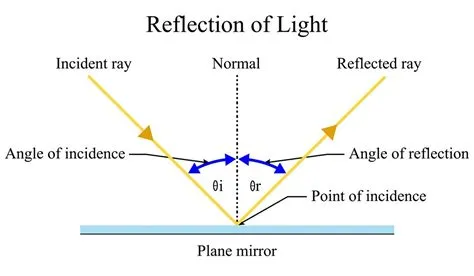
INTERIORDECOR.BIZ.ID – Light is a fundamental aspect of our universe, playing a crucial role in how we perceive and interact with our surroundings. In physics, understanding light is key to unlocking many scientific principles.
For many organisms, light serves as the primary tool for experiencing the world and engaging with it. The sun’s light, for instance, not only warms our planet but also drives global weather patterns and initiates the life-sustaining processes we observe.
What is Light in Physics?
In physics, light is understood as a form of electromagnetic radiation that is visible to the human eye. It is a type of energy that travels in waves, much like ripples on a pond, but these waves are electromagnetic.
These waves possess both wave-like and particle-like properties, a concept known as wave-particle duality. This dual nature is one of the most fascinating aspects of light and a core concept in modern physics.
The Electromagnetic Spectrum
Light is part of a broader spectrum called the electromagnetic spectrum. This spectrum includes various forms of radiation, such as radio waves, microwaves, infrared radiation, visible light, ultraviolet radiation, X-rays, and gamma rays.
Visible light represents a very narrow band within this vast spectrum. It is the portion that our eyes can detect, allowing us to see colors and objects around us.
Wave Properties of Light
As a wave, light has specific characteristics, including wavelength and frequency. The wavelength refers to the distance between two consecutive crests or troughs of the wave.
Frequency, on the other hand, is the number of waves that pass a point in one second. Different wavelengths and frequencies of visible light correspond to different colors.
Particle Properties of Light
Light also behaves as if it is composed of tiny packets of energy called photons. These photons are massless particles that carry energy and travel at the speed of light.
The energy of a photon is directly proportional to the frequency of the light; higher frequency means higher energy photons. This particle nature is crucial in understanding phenomena like the photoelectric effect.
How Light Travels
Light travels in straight lines, a principle known as the rectilinear propagation of light. This is why shadows are formed when an opaque object blocks the path of light.
The speed of light in a vacuum is constant and is the fastest speed possible in the universe, approximately 299,792 kilometers per second. This speed changes when light travels through different mediums like water or glass.
Reflection and Refraction
When light encounters a surface, it can be reflected or refracted. Reflection is when light bounces off a surface, like a mirror. This principle is why we can see ourselves in a mirror.
Refraction occurs when light bends as it passes from one medium to another, such as from air to water. This bending is due to the change in the speed of light in different mediums.
Applications of Light
The understanding of light has led to numerous technological advancements. From simple devices like mirrors and lenses to complex technologies like lasers and fiber optics, light is indispensable.
Lasers, for example, produce a highly focused beam of light with specific properties, used in everything from barcode scanners to medical surgery. Fiber optics transmit data using light signals over long distances, forming the backbone of the internet.
Light and Vision
Our ability to see is entirely dependent on light. Light rays from an object enter our eyes and are focused onto the retina by the lens.
Specialized cells in the retina called photoreceptors convert this light into electrical signals, which are then sent to the brain to be interpreted as images.
Colors and Perception
The perception of color is a result of how objects interact with light. Objects appear a certain color because they absorb some wavelengths of light and reflect others.
For example, a red apple appears red because it absorbs most wavelengths of visible light and reflects the red wavelengths. White objects reflect all wavelengths, while black objects absorb all wavelengths.
Key Takeaways for Class 8
- Light is a form of electromagnetic radiation and energy.
- It exhibits both wave-like and particle-like properties (wave-particle duality).
- The visible light spectrum is a small part of the larger electromagnetic spectrum.
- Light travels in straight lines and at a constant speed in a vacuum.
- Reflection and refraction are key ways light interacts with surfaces and mediums.
Grasping these fundamental concepts of light will provide a solid foundation for further exploration in physics. The journey of understanding light is continuous and reveals the intricate beauty of the physical world around us.
Frequently Asked Questions (FAQ)
What is light in simple terms?
Light is a form of energy that we can see, which travels in waves and helps us to see objects around us. It’s like a messenger that carries information about the world to our eyes.
Does light travel in a straight line?
Yes, in general, light travels in straight lines. This is why we can see shadows form when something blocks the light.
What is the difference between reflection and refraction?
Reflection is when light bounces off a surface, like a ball bouncing off a wall. Refraction is when light bends as it passes through different materials, like a straw appearing bent in a glass of water.
Why do we see different colors?
We see different colors because objects absorb some colors of light and reflect others. The color we see is the color of light that is reflected back to our eyes.
Is light the only thing that travels in waves?
No, light is a type of wave called an electromagnetic wave. Other waves include sound waves (which travel through air or water) and water waves.
Written by: Robert Miller