
 ZeckRV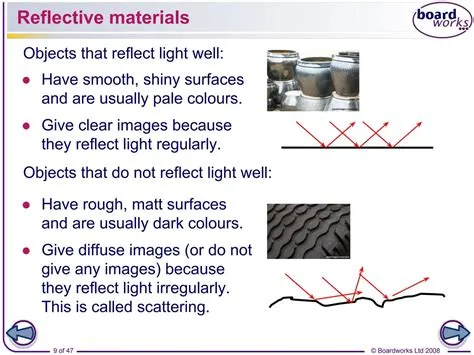
INTERIORDECOR.BIZ.ID – Light is a fundamental concept in science, crucial for our perception of the world and many biological processes. For students at the Key Stage 3 (KS3) level, understanding light involves grasping its basic properties and how it interacts with objects.
At its core, light is a form of electromagnetic radiation that our eyes can detect, enabling us to see. It is what allows us to distinguish colours, shapes, and distances, making it essential for almost all life on Earth.
What is Light?
Scientifically, light is part of the electromagnetic spectrum, a range of waves that travel at the speed of light. Visible light, the portion we can see, sits between ultraviolet (UV) radiation and infrared (IR) radiation on this spectrum.
Think of it like a rainbow; the colours within a rainbow represent different wavelengths of visible light. Each colour corresponds to a specific energy level within this visible spectrum.
Sources of Light
There are two main types of light sources: luminous and non-luminous. Luminous sources produce their own light, like the Sun or a light bulb. These are the primary origins of the light we experience daily.
Non-luminous objects, on the other hand, do not produce their own light. Instead, they reflect light from luminous sources, which is how we see them. A mirror reflects light, and a book absorbs some colours of light while reflecting others, showing us its colour.
Properties of Light
One of the most important properties of light is that it travels in straight lines. This is often demonstrated through experiments involving pinholes or shadows, where light beams cast clear outlines.
This straight-line travel is why we can predict where a shadow will form and why objects appear to have distinct edges. When light hits an opaque object, it cannot pass through, creating a dark area behind it known as a shadow.
Reflection and Refraction
When light strikes a surface, it can bounce off, a phenomenon called reflection. The angle at which light hits a surface is related to the angle at which it bounces back, following the law of reflection.
Conversely, when light passes from one medium to another (like from air to water), it can bend. This bending of light is called refraction and is responsible for optical illusions like a straw appearing bent in a glass of water.
The Electromagnetic Spectrum
Light is a tiny part of a much larger spectrum of electromagnetic waves. This spectrum includes radio waves, microwaves, infrared, visible light, ultraviolet, X-rays, and gamma rays, all differing in their wavelength and energy.
The Sun is a significant source of electromagnetic radiation, providing the light and heat that sustain life. While we only see visible light, other forms of radiation from the Sun have different effects, some beneficial like UV for vitamin D production, and others potentially harmful in excess.
Light and Life
Light from the Sun plays a vital role in warming the Earth and driving weather patterns. For plants, light is essential for photosynthesis, the process by which they convert light energy into chemical energy for growth.
Animals use light to navigate, find food, and avoid predators. The ability to perceive light and its properties is therefore a critical evolutionary advantage for many organisms.
Key Takeaways for KS3
- Light is a form of electromagnetic radiation that allows us to see.
- It travels in straight lines and can be reflected or refracted.
- Sources of light can be luminous (producing light) or non-luminous (reflecting light).
- Light is part of the wider electromagnetic spectrum.
- Light from the Sun is crucial for life on Earth.
Understanding these basic principles of light provides a solid foundation for further study in physics and other scientific disciplines. It helps explain everyday phenomena and the complex workings of the universe around us.
By studying light, KS3 students gain insights into optics, energy transfer, and the fundamental forces that shape our world. This knowledge is not only academic but also practical, informing our understanding of everything from vision to technology.
Frequently Asked Questions (FAQ)
What is the definition of light for KS3 students?
For KS3 students, light is defined as a form of energy that travels in straight lines and allows us to see the world around us. It’s part of the electromagnetic spectrum that our eyes can detect.
What are the main properties of light taught at KS3?
At KS3, key properties of light include travelling in straight lines, reflection (bouncing off surfaces), and refraction (bending when passing through different materials).
What are luminous and non-luminous objects?
Luminous objects are those that produce their own light, like the Sun or a lamp. Non-luminous objects do not produce their own light; they are visible because they reflect light from luminous sources.
How does light from the Sun affect Earth?
Light from the Sun warms the Earth, drives weather patterns, and is essential for photosynthesis, the process plants use to create food, which sustains much of life.
Is light the only type of electromagnetic radiation?
No, light is just one part of the electromagnetic spectrum. Other types include radio waves, microwaves, infrared, ultraviolet, X-rays, and gamma rays, each with different properties and uses.
Written by: James Wilson