
 ZeckRV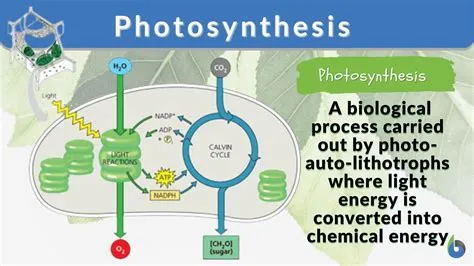
INTERIORDECOR.BIZ.ID – Light is a fundamental element for life on Earth, playing a critical role in numerous biological processes. Among these, photosynthesis stands out as a primary mechanism by which organisms harness light’s energy. Light from the Sun not only warms our planet and drives weather patterns but also initiates the life-sustaining process of photosynthesis in plants and other autotrophs.
Photosynthesis, at its core, is the process by which green plants and some other organisms use sunlight to synthesize foods with the help of chlorophyll pigment. This remarkable biological conversion transforms light energy into chemical energy, stored in the bonds of glucose molecules. Without light, this vital process, which forms the base of most food chains, simply could not occur.
What is Photosynthesis?
Photosynthesis can be broadly defined as the process used by plants, algae, and cyanobacteria to convert light energy into chemical energy. This chemical energy is then stored in carbohydrate molecules, such as sugars, which are synthesized from carbon dioxide and water.
The overall chemical equation for photosynthesis is a simplified representation of this complex process: 6CO2 + 6H2O + Light Energy → C6H12O6 + 6O2. This equation shows that carbon dioxide and water, in the presence of light energy, are converted into glucose (a sugar) and oxygen.
The Role of Light Energy
Light serves as the essential energy input for photosynthesis. Different wavelengths of light possess varying amounts of energy, and plants have evolved specific pigments to capture this energy effectively. The visible light spectrum, ranging from red to violet, is what photosynthetic organisms primarily utilize.
Chlorophyll, the green pigment found in chloroplasts, is the main light-absorbing molecule. It efficiently absorbs light in the blue and red portions of the spectrum while reflecting green light, which is why most plants appear green to our eyes.
The Process of Photosynthesis
Photosynthesis occurs in two main stages: the light-dependent reactions and the light-independent reactions (also known as the Calvin cycle). Both stages are crucial for the overall conversion of light energy into chemical energy.
The light-dependent reactions take place in the thylakoid membranes within chloroplasts. Here, light energy is absorbed by chlorophyll and used to split water molecules, releasing oxygen as a byproduct. This process also generates energy-carrying molecules, ATP and NADPH, which are essential for the next stage.
Light-Independent Reactions (Calvin Cycle)
The light-independent reactions occur in the stroma, the fluid-filled space within chloroplasts. In this stage, the ATP and NADPH produced during the light-dependent reactions are used to convert carbon dioxide into glucose.
This cycle does not directly require light, but it depends on the products of the light-dependent reactions, hence its name. It effectively “fixes” atmospheric carbon dioxide into an organic molecule, a crucial step in producing food.
Importance of Photosynthesis
Photosynthesis is the cornerstone of life on Earth, providing the oxygen we breathe and the food we eat, either directly or indirectly. It forms the foundation of nearly all ecosystems by converting inorganic matter into organic compounds.
Furthermore, the oxygen released as a byproduct of photosynthesis has profoundly shaped Earth’s atmosphere, enabling the evolution of aerobic respiration in many organisms, including humans. Understanding light’s role in this process is therefore vital for comprehending planetary biology and environmental science.
Factors Affecting Photosynthesis
Several environmental factors can influence the rate of photosynthesis. These include the intensity and wavelength of light, the concentration of carbon dioxide, temperature, and the availability of water.
Optimal conditions for light intensity, CO2 levels, and temperature are necessary for maximum photosynthetic efficiency. Deviations from these optimal ranges can significantly slow down or even halt the process, impacting plant growth and productivity.
The Sun: Earth’s Ultimate Light Source
The Sun is the ultimate source of light energy that drives photosynthesis globally. Its consistent and abundant output provides the necessary power for plants to produce energy and sustain life.
The energy from the Sun not only fuels photosynthesis but also warms the Earth and drives global weather patterns. This interconnectedness highlights the profound impact of light on our planet’s systems and the life it supports.
Conclusion
In conclusion, light is an indispensable component of photosynthesis, serving as the primary energy source that fuels the synthesis of organic compounds. This process is fundamental for life, producing oxygen and forming the base of food webs.
By understanding how plants capture and utilize light energy, we gain a deeper appreciation for the delicate balance of ecosystems and the vital role of solar energy in sustaining life on our planet.
Frequently Asked Questions (FAQ)
What is chlorophyll?
Chlorophyll is the green pigment found in chloroplasts of plants and algae, responsible for absorbing light energy for photosynthesis.
Where does photosynthesis take place in a plant cell?
Photosynthesis primarily occurs in the chloroplasts, organelles within plant cells that contain chlorophyll and other necessary components.
What are the main products of photosynthesis?
The main products of photosynthesis are glucose (a sugar used for energy and growth) and oxygen (released into the atmosphere).
Does photosynthesis happen at night?
No, photosynthesis requires light energy and therefore cannot occur at night. The light-independent reactions can proceed in the absence of direct light, but they depend on the products generated during the light-dependent phase.
Why is photosynthesis important for humans?
Photosynthesis is crucial for humans as it produces the oxygen we breathe and forms the basis of most food chains, providing sustenance directly or indirectly through the consumption of plants and animals.
Written by: Sarah Davis