
 ZeckRV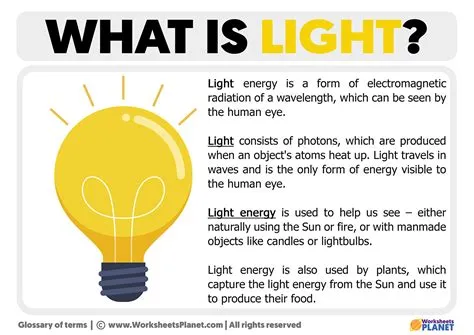
INTERIORDECOR.BIZ.ID – Light is an amazing thing that helps us see the world around us. It travels super fast and comes from many different places, like the sun or a lamp. Without light, our eyes wouldn’t be able to see colors, shapes, or even each other!
Think about when you turn on a flashlight in a dark room. Suddenly, you can see everything! That’s because the flashlight is sending out light waves. These waves are like tiny ripples of energy that travel through the air and into our eyes.
What is Light Made Of?
Scientists tell us that light is a form of energy called electromagnetic radiation. This might sound like a big, complicated word, but it just means light is a wave that carries energy. These waves are special because they can travel through empty space, like the vast distance from the sun to Earth.
Imagine throwing a pebble into a pond. It creates ripples that spread out. Light waves are similar, but they don’t need water to travel; they can move through anything, even a vacuum like outer space. This is how sunlight reaches us every day.
Types of Light Waves
Light waves come in different sizes and energies. We can only see a small part of these waves, and we call this visible light. This is the light that lets us see all the beautiful colors in a rainbow.
There are also other types of light waves that we can’t see, like infrared light, which we feel as heat, and ultraviolet (UV) light, which can give us sunburns. These invisible waves are still light, just not the kind our eyes are built to detect.
How Do We See Light?
Our eyes are like special cameras that capture light. When light bounces off an object, like a red ball, and then enters our eyes, it hits a part called the retina at the back of our eye.
The retina has tiny cells that send messages to our brain through nerves. Our brain then interprets these messages as an image, telling us we are seeing a red ball. This whole process happens incredibly fast!
Light and Color
Have you ever wondered why things have different colors? White light, like sunlight, is actually made up of all the colors of the rainbow mixed together. When light hits an object, some colors are absorbed by the object, and some are reflected back to our eyes.
If an object looks red, it means it absorbed all the colors except red, which it reflected. This is why we see it as red. The same idea applies to all the colors we see every day.
Where Does Light Come From?
Light can come from natural sources, like the Sun, stars, and lightning. The Sun is our most important natural light source, providing warmth and light that allows plants to grow and sustains life on Earth.
We also create our own light using artificial sources, such as light bulbs, LEDs, candles, and even fire. These inventions allow us to see and do things even when the sun isn’t out, extending our day and enabling many activities.
The Speed of Light
Light is the fastest thing in the universe! It travels at an incredible speed of about 299,792 kilometers per second (or about 186,282 miles per second).
To put that into perspective, light could travel around the Earth over seven times in just one second. This amazing speed is why we see things almost instantly when we look at them, even if they are very far away.
Light and Our World
Light plays a crucial role in our world, beyond just helping us see. The Sun’s light warms our planet, influencing weather patterns and making life possible. Plants use light for photosynthesis, the process of making their own food.
Understanding light helps scientists study distant stars, develop new technologies like lasers, and even learn more about how our own vision works. It’s a fundamental part of science and our everyday experience.
Fun Facts About Light
- Light travels so fast that it can circle the Earth more than seven times in one second!
- The Sun is the biggest source of light for our planet.
- White light is made up of all the colors of the rainbow.
- We can only see a small portion of light, called visible light.
- Plants need light to grow through a process called photosynthesis.
Conclusion
So, light is a fascinating form of energy that allows us to see, keeps our planet warm, and is essential for life. From the sun in the sky to the lamps in our homes, light is all around us, making our world bright and understandable.
The study of light, called optics, is a huge part of science, helping us understand everything from how our eyes work to how telescopes can see far-off galaxies. Keep looking around and exploring the wonderful world of light!
Frequently Asked Questions About Light
What is the simplest definition of light for kids?
Light is energy that travels in waves and helps us see things. It’s like a special messenger from objects to our eyes!
Where does light come from?
Light comes from natural sources like the Sun and stars, and from artificial sources we make, like light bulbs.
Why do things have colors?
Things have colors because they reflect certain colors of light and absorb others. The color we see is the color that bounces back to our eyes.
Is light always good?
Light is mostly good and necessary for life! However, too much of some types of light, like UV light from the sun, can be harmful, so it’s important to protect ourselves.
Can light travel through walls?
Generally, light cannot travel through solid walls. Walls block light. However, some materials are transparent or translucent, allowing light to pass through them, like glass or thin paper.
Written by: David Thomas