
 ZeckRV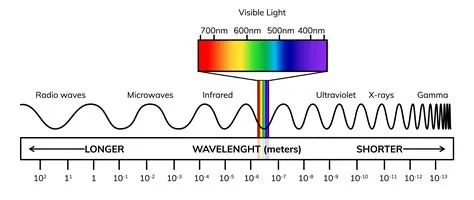
INTERIORDECOR.BIZ.ID – Light is a fundamental phenomenon that allows us to perceive our world, from the vibrant colors of a sunset to the intricate details of microscopic organisms. Beyond its role in vision, light from the Sun plays a crucial role in warming our planet, driving weather systems, and initiating life-sustaining biological processes. Understanding light, particularly its nature as waves, is key to unlocking many scientific and technological advancements.
Historically, the exact nature of light was a subject of intense debate among scientists. Early theories proposed light as a stream of particles, while others suggested it behaved as a wave. Modern physics has reconciled these viewpoints, understanding that light exhibits properties of both particles (photons) and waves. This duality is a cornerstone of quantum mechanics.
What is a Wave?
To understand light waves, it’s essential to grasp the general concept of a wave. A wave is a disturbance that transfers energy through a medium or, in the case of electromagnetic waves like light, through a vacuum. Imagine dropping a pebble into a still pond; the ripples that spread outwards are a visual representation of a wave transferring energy from the point of impact.
Key characteristics of waves include their amplitude, wavelength, and frequency. The amplitude refers to the maximum displacement or height of the wave from its rest position. The wavelength is the distance between two consecutive crests or troughs of a wave. Frequency, on the other hand, is the number of wave cycles that pass a given point per second, measured in Hertz (Hz).
The Electromagnetic Spectrum
Light, as we commonly experience it, is just a small portion of a much broader spectrum known as the electromagnetic (EM) spectrum. This spectrum encompasses all forms of electromagnetic radiation, arranged according to their wavelength and frequency. These radiations are fundamentally similar, differing only in their energy levels and hence their observed properties and effects.
The electromagnetic spectrum includes radio waves, microwaves, infrared radiation, visible light, ultraviolet (UV) radiation, X-rays, and gamma rays. Each of these forms of radiation travels at the speed of light in a vacuum, approximately 299,792 kilometers per second. The primary distinction lies in their wavelengths and frequencies.
Visible Light: Our Window to the World
Visible light is the narrow band of the EM spectrum that our eyes can detect. This band ranges from red light, which has the longest wavelength and lowest frequency, to violet light, which has the shortest wavelength and highest frequency. The colors we see, such as red, orange, yellow, green, blue, indigo, and violet (ROYGBIV), are simply different wavelengths of visible light.
When white light, like sunlight, passes through a prism, it splits into its constituent colors. This phenomenon, known as dispersion, demonstrates that white light is composed of all the colors of the visible spectrum. Different objects absorb and reflect these wavelengths differently, which is why we perceive them in various colors.
Wave Properties of Light
Several phenomena highlight the wave nature of light. One such phenomenon is interference. When two light waves meet, they can either reinforce each other (constructive interference), resulting in brighter light, or cancel each other out (destructive interference), leading to darkness.
Another key wave property is diffraction. Diffraction occurs when light waves bend as they pass through narrow openings or around obstacles. This bending causes the light to spread out, a behavior inconsistent with a purely particle model but readily explained by wave theory. The degree of diffraction depends on the wavelength of light and the size of the opening or obstacle.
Polarization
Polarization is a characteristic of transverse waves, such as light, that describes the orientation of the oscillations. In unpolarized light, the electric field oscillates in all directions perpendicular to the direction of propagation. Polarized light, however, has oscillations confined to a single plane.
This property is utilized in various applications, including sunglasses that reduce glare, camera filters, and LCD screens. Understanding polarization further solidifies the understanding of light’s wave-like behavior.
Applications and Importance
The study of light as waves has led to transformative technologies. From the lasers used in telecommunications and medical procedures to the development of advanced imaging techniques, the wave nature of light is fundamental. Even the basic principles of optics, governing how lenses and mirrors work, are rooted in the wave properties of light.
In essence, light is a complex and fascinating phenomenon. Recognizing its wave nature is crucial for comprehending its interactions with matter and its profound impact on our universe, from the vastness of space to the intricate workings of our own biology.
Frequently Asked Questions
What is the difference between light waves and sound waves?
Light waves are electromagnetic waves that can travel through a vacuum, like space, and do not require a medium. Sound waves are mechanical waves that require a medium, such as air, water, or solids, to propagate.
What is the speed of light?
The speed of light in a vacuum is a universal constant, approximately 299,792,458 meters per second, often rounded to 300,000 kilometers per second.
Why do we see different colors?
We see different colors because objects absorb certain wavelengths of visible light and reflect others. Our eyes detect these reflected wavelengths as distinct colors.
Written by: Emily Taylor