
 ZeckRV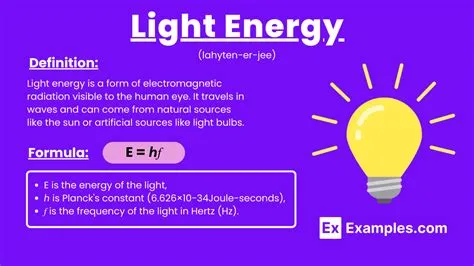
INTERIORDECOR.BIZ.ID – Light energy is a fundamental concept that helps us understand the world around us. It is a form of energy that allows us to see, warms our planet, and powers essential life processes. Understanding light energy is crucial for grasping many scientific principles taught in elementary school.
For many organisms, light is the primary tool for perceiving their environment and interacting with it. Sunlight, for instance, is a powerful source of light energy that warms the Earth, influencing global weather patterns and initiating many life-sustaining processes.
What is Light Energy?
Light energy, often referred to simply as light, is a type of electromagnetic radiation that is visible to the human eye. It travels in waves and can also behave like tiny particles called photons. This dual nature of light is a key concept in physics.
Imagine waves on water; light waves also spread out and carry energy. These waves have different wavelengths, and the ones our eyes detect are what we call visible light, allowing us to see colors.
Sources of Light Energy
The most significant source of light energy for Earth is the Sun. Its rays travel vast distances to reach us, providing light and warmth. Other sources include artificial lights like bulbs, candles, and even fireflies.
Every source emits light energy in different ways, but the common factor is the release of electromagnetic waves. The Sun’s energy, for example, is generated through nuclear fusion in its core.
The Sun: Our Primary Light Source
The Sun’s immense power generates light energy through a process called nuclear fusion. This is where hydrogen atoms combine to form helium, releasing a tremendous amount of energy in the process. This energy radiates outward in all directions, including towards Earth.
This solar energy is vital for life on Earth. It drives photosynthesis in plants, which forms the base of most food chains, and it helps regulate Earth’s temperature, making it habitable.
Artificial Light Sources
Humans have created various artificial sources of light energy to extend our activities beyond daylight hours. These include incandescent bulbs, fluorescent lights, LEDs, and lasers, each working on different principles to produce light.
While natural light from the Sun is abundant, artificial lights provide convenience and enable us to work, study, and socialize in diverse conditions. They convert electrical energy into light energy.
How We Use Light Energy
Our most basic use of light energy is for vision. Light reflects off objects and enters our eyes, allowing our brains to process images and see the world. Without light, our surroundings would appear completely dark.
Beyond sight, light energy is crucial for plant growth through photosynthesis. Plants use light energy to convert carbon dioxide and water into glucose (food) and oxygen.
Photosynthesis: Light Energy for Plants
Photosynthesis is a remarkable process where plants, algae, and some bacteria harness light energy from the Sun. They use this energy to create their own food, a type of sugar called glucose. This process is the foundation of most ecosystems on Earth.
The energy captured from sunlight is stored in the chemical bonds of glucose molecules. This stored energy then fuels the plant’s growth and development, and when animals eat plants, they also gain this energy.
The Importance of Light Energy
Light energy is essential for life. It not only allows us to see but also warms our planet, regulates our circadian rhythms, and powers crucial biological processes like photosynthesis. Its presence is a defining characteristic of our living planet.
From the warmth of the Sun on our skin to the vibrant colors we perceive, light energy plays an indispensable role in our daily lives and the functioning of the Earth’s ecosystems.
Types of Light Energy
Visible light, the kind we can see, is just a small part of the electromagnetic spectrum. This spectrum includes other forms of energy like radio waves, microwaves, infrared radiation (heat), ultraviolet (UV) radiation, X-rays, and gamma rays.
Each type of electromagnetic radiation has a different wavelength and frequency, but they all travel at the speed of light. While we can’t see most of these, they all carry energy and have various effects.
The Electromagnetic Spectrum
The electromagnetic spectrum arranges all types of electromagnetic radiation by their wavelength and frequency. Radio waves have the longest wavelengths and lowest frequencies, while gamma rays have the shortest wavelengths and highest frequencies.
Visible light sits in the middle of this spectrum. The colors we see – red, orange, yellow, green, blue, indigo, and violet (ROYGBIV) – represent different wavelengths within the visible light range.
Light Energy and Heat
Light energy is closely related to heat energy. When light, particularly from the Sun, strikes an object, some of that light energy is absorbed and converted into thermal energy, which we feel as heat. This is why surfaces exposed to sunlight get warm.
This absorption and conversion process is fundamental to how the Earth is warmed. Different materials absorb and reflect light differently, leading to varying temperature changes.
Absorption and Reflection
When light hits a surface, it can be absorbed, reflected, or transmitted. Absorbed light energy often turns into heat. Reflected light bounces off the surface, allowing us to see the object. Transmitted light passes through the object, like light through a window pane.
Dark-colored objects tend to absorb more light and get hotter than light-colored objects, which reflect more light. This principle is used in various applications, such as solar heating and choosing clothing colors for different weather.
Conclusion: The Power of Light Energy
Light energy is a powerful and essential force that shapes our world. From enabling sight to driving biological processes and warming our planet, its impact is profound and far-reaching. Understanding its basic properties opens the door to comprehending many scientific phenomena.
As we continue to learn about energy, recognizing the role of light energy is a vital step. It is a bright and fascinating topic that impacts every living thing on Earth.
Frequently Asked Questions (FAQ)
- What is the main source of light energy for Earth?
- The Sun is the primary source of light energy for Earth, providing warmth and powering life-sustaining processes.
- Can light energy be seen?
- Yes, visible light is a form of light energy that our eyes can detect, allowing us to see colors and objects.
- What is photosynthesis?
- Photosynthesis is the process plants use to convert light energy, water, and carbon dioxide into food (glucose) and oxygen.
- Does light energy cause heat?
- Yes, when light energy is absorbed by an object, it can be converted into heat energy, making the object warmer.
- Are there other types of light energy besides visible light?
- Yes, visible light is just a part of the electromagnetic spectrum, which also includes radio waves, infrared, UV rays, and more, all carrying energy.
Frequently Asked Questions (FAQ)
What is the main source of light energy for Earth?
The Sun is the primary source of light energy for Earth, providing warmth and powering life-sustaining processes.
Can light energy be seen?
Yes, visible light is a form of light energy that our eyes can detect, allowing us to see colors and objects.
What is photosynthesis?
Photosynthesis is the process plants use to convert light energy, water, and carbon dioxide into food (glucose) and oxygen.
Does light energy cause heat?
Yes, when light energy is absorbed by an object, it can be converted into heat energy, making the object warmer.
Are there other types of light energy besides visible light?
Yes, visible light is just a part of the electromagnetic spectrum, which also includes radio waves, infrared, UV rays, and more, all carrying energy.
Written by: Robert Miller